A Drive-Thru Racking System is a high-density pallet storage solution designed for access from both ends. Forklifts enter one side and exit the other. This simple movement supports first-in, first-out inventory rotation.
The structure uses deep lanes, rails, uprights, and pallet supports. A forklift can travel inside the lane, placing pallets on guided positions. Imagine chilled food pallets moving through a cold room, with older stock leaving before newer stock. That visual explains the system better than a specification sheet.
Dr. Edward H. Frazelle, a recognized warehousing researcher, explains the guiding principle this way: “Warehouse design should begin with the flow of goods, not the shape of the building.”
That principle matters here. A Drive-Thru Racking System can increase storage density while preserving access at both ends. It may suit food distribution, beverage storage, manufacturing materials, and other products requiring controlled rotation.
However, high density does not guarantee high performance. The system needs accurate pallet dimensions, disciplined loading, clear travel paths, and trained forklift operators. Small errors can create serious delays. One damaged rail can affect an entire lane.
The design also has limits. It usually offers less direct access than selective pallet racking. Slow-moving, uniform products often benefit most. Mixed stock may become difficult to locate.
This is where practical judgment matters. A warehouse may gain capacity yet lose flexibility. Reviewing product velocity, pallet weight, temperature conditions, and handling equipment remains essential before installation.
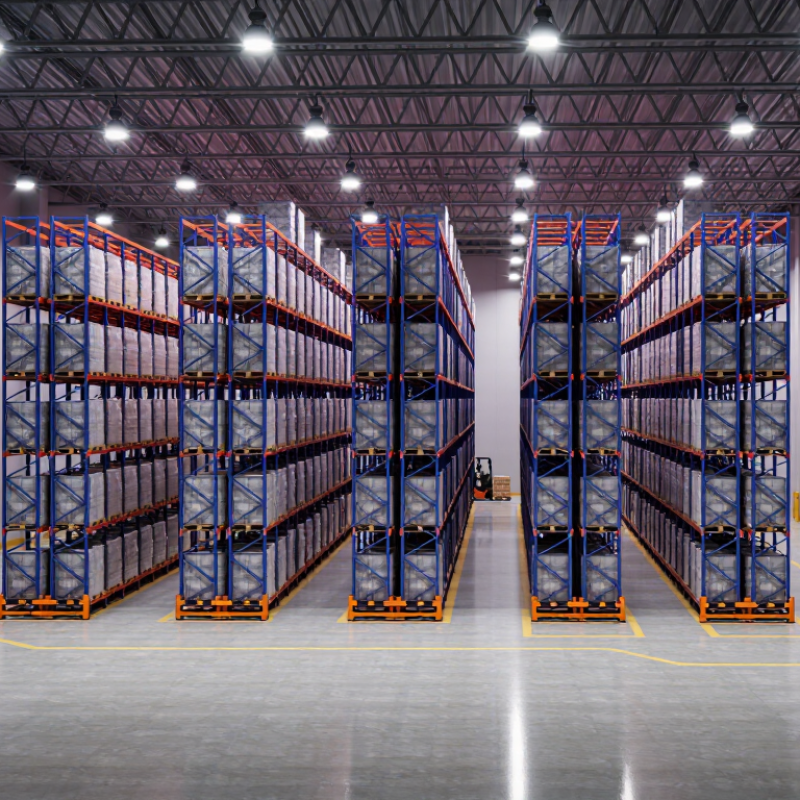
A drive-thru racking system is a high-density storage structure built for forklifts to enter from both ends. Its core purpose is to store palletized goods across deep lanes while preserving access from the front and rear. Unlike drive-in racking, it can support a first-in, first-out flow when loading and unloading are carefully managed. This makes it useful for products with regular rotation, such as packaged food, beverages, and temperature-sensitive inventory. The system reduces the number of aisles, so it can increase pallet capacity within a limited warehouse footprint. It is not a perfect density solution. Access, product rotation, and forklift control still require disciplined planning.
Industry data supports a cautious approach. The U.S. Occupational Safety and Health Administration reports about 35,000 serious forklift injuries and 85 fatalities each year. Therefore, lane width, rack protection, visibility, and operator training are central design requirements, not optional details. The 2024 MHI Annual Industry Report also found that 83% of supply-chain professionals planned to maintain or increase technology investment. That trend encourages better inventory tracking around dense storage systems. Yet software cannot correct poor lane discipline or damaged pallets. Real warehouses are less tidy than diagrams. A practical design should test turning paths, pallet condition, stock rotation, and emergency access before installation.
| Category | Data Dimension | Definition or Typical Information | Operational Significance |
|---|---|---|---|
| Basic Definition | Drive-Thru Racking System | A high-density pallet storage system that allows a forklift to enter a storage lane from either end. | Both ends of the rack remain accessible, allowing pallets to be loaded from one side and retrieved from the opposite side. |
| Core Purpose | Storage Objective | To maximize pallet storage density while preserving access to both ends of each storage lane. | It reduces unused aisle space compared with conventional selective pallet racking and supports organized material flow. |
| Inventory Flow | Primary Stock Rotation | First-In, First-Out (FIFO) is the standard operating method when pallets are loaded at one end and retrieved from the other. | FIFO can help manage products with expiration dates, production sequences, or defined dispatch priorities. |
| System Type | Rack Access Classification | It is a forklift-accessible, deep-lane pallet storage system with structural rails that support pallets inside the lanes. | Forklifts travel into the rack structure, so vehicle compatibility, operator training, and protective measures are essential. |
| Rack Structure | Main Components | Typical components include upright frames, horizontal beams, pallet support rails, bracing, guide rails, row spacers, and end protection. | Each component contributes to load support, rack stability, forklift guidance, or impact protection. |
| Loading Method | Pallet Placement | Pallets are placed on continuous support rails within a lane, generally from the accessible front or rear face. | Consistent pallet positioning is required to maintain clearance and prevent contact with adjacent pallets or rack members. |
| Unloading Method | Pallet Retrieval | A forklift enters the opposite end of the lane and removes the pallet positioned for dispatch. | The arrangement supports sequential movement of inventory through the rack when lane discipline is maintained. |
| Storage Density | Space Utilization | Usually provides higher storage density than selective racking because fewer operating aisles are required. | It is useful where floor area is limited and a large quantity of similar pallets must be stored. |
| Lane Depth | Recommended Design Principle | Lane depth should be based on pallet dimensions, forklift reach, load stability, building height, and required handling clearance. | There is no universal lane depth; excessive depth can reduce accessibility and increase handling risk. |
| Vertical Levels | Storage Height | The number of pallet levels depends on clear building height, pallet height, load weight, equipment reach, and required vertical clearances. | Higher levels increase capacity but require verified rack design, suitable lifting equipment, and controlled installation tolerances. |
| Load Capacity | Rated Pallet Load | Capacity is determined by the rack manufacturer or qualified designer for each beam, rail, upright, and storage level. | Loads must never exceed the approved rating, and capacity signs should be displayed where required by local regulations. |
| Suitable Products | Inventory Profile | Best suited to large quantities of uniform or similar pallets, particularly products with predictable demand and repeatable dimensions. | Product standardization improves lane utilization and reduces the chance of pallet interference. |
| Product Rotation | FIFO Suitability | Well suited to products that should move in loading sequence, including date-sensitive or batch-controlled inventory. | FIFO operation requires separate loading and unloading faces and accurate control of pallet sequence. |
| Alternative Configuration | Drive-In Comparison | Drive-in racking is normally accessed from one end and commonly follows a Last-In, First-Out (LIFO) pattern; drive-thru racking is accessible from both ends. | The choice depends mainly on required stock rotation, access frequency, product type, and available warehouse layout. |
| Forklift Requirement | Handling Equipment | The forklift must be suitable for the aisle width, rack height, lane depth, pallet type, and load capacity. | Equipment dimensions and turning behavior directly affect safety, throughput, and rack clearance. |
| Warehouse Layout | Traffic Arrangement | The rack normally requires a receiving or replenishment face and a separate dispatch or picking face. | Clear traffic separation can reduce cross-traffic, congestion, and the risk of loading and unloading conflicts. |
| Advantages | Primary Benefits | High storage density, two-sided access, improved stock rotation, and efficient use of warehouse floor space. | It can lower the space required per stored pallet when product variety is moderate and lane utilization is high. |
| Limitations | Common Constraints | Lower selectivity than selective racking, dependence on compatible pallets, restricted product variety per lane, and higher forklift interaction with the rack. | It may be unsuitable where every pallet must be accessed individually at all times. |
| Safety Control | Operating Requirements | Use trained forklift operators, observe posted load limits, maintain rack protection, keep lanes clear, and inspect for impact damage. | Safe performance depends on both correct rack design and disciplined daily operation. |
| Inspection | Maintenance Focus | Inspections should check upright frames, beams, support rails, bracing, anchors, guards, pallet condition, and visible deformation. | Damaged components should be isolated and assessed by a competent person before the rack is returned to service. |
| Best-Fit Applications | Typical Warehouse Uses | Bulk pallet storage, cold-storage facilities, distribution centers, production warehouses, and operations handling repeatable pallet loads. | The system is most effective when high density and orderly product flow are more important than maximum individual-pallet selectivity. |
| Design Decision | Selection Criteria | Key factors include inventory turnover, SKU quantity, pallet dimensions, load weights, required FIFO performance, building height, and forklift specifications. | A qualified storage-system designer should verify the layout and structural design before installation and use. |
It stores pallets in deep lanes accessed from both ends. Forklifts can enter one side and exit the other.
Uniform products work best. Pallets should have similar sizes, weights, and handling requirements.
High-volume warehouses with limited product variety are suitable. Cold rooms and seasonal storage areas may also benefit.
It supports first-in, first-out movement better than one-sided layouts. However, clear labels and even loading remain necessary.
Deep lanes reduce aisle space and increase storage density. More pallets can fit across a smaller floor area.
The system offers less flexibility than selective storage. Different pallet sizes may create awkward gaps and slower handling.
Check load limits, floor strength, rack anchors, rails, beams, frames, and pallet condition. Never exceed posted capacity.
Mark entry and exit points clearly. Keep speeds low, use barriers, and center every pallet before placement.
Cold temperatures may reduce battery performance. Humidity can increase corrosion, while dust can collect on rails and pallets.
Recheck lane depth, turning clearance, braking space, lighting, and floor flatness. A few extra positions may not justify difficult access.
A Drive-Thru Racking System is a high-density storage solution that allows forklifts to enter the rack from one side and exit through the opposite side. It is built with upright frames, horizontal rails, entry and exit points, protective guards, and pallet supports arranged in deep storage lanes. Unlike drive-in racking, which usually has only one access side and follows a last-in, first-out approach, drive-thru racking supports access from both ends and is better suited to first-in, first-out inventory rotation.
This system is ideal for warehouses storing large quantities of uniform, palletized goods that require regular movement, especially products with expiration dates or strict stock rotation needs. It can maximize floor space and reduce aisle requirements, but it generally involves higher installation costs and more complex planning than conventional racks. Safe operation depends on stable pallets, suitable load ratings, clear lane management, routine inspections, forklift training, and protective measures to reduce collision risks and maintain structural stability.