
Explore our heavy-duty, hygienically compliant, and environmentally sustainable plastic pallets manufactured to international ISO and CE quality standards.
In modern industrial logistics, automated warehousing systems (ASRS), cold chain storage, and high-density racking demand load-bearing components built to exacting tolerances. As an ISO 9001 and ISO 14001 certified plastic pallet manufacturer, our engineering framework integrates structural fluid dynamics, high-molecular-weight polymers, and automated injection molding processes to deliver pallets that outperform traditional timber platforms across every measurable operational metric.
Every plastic pallet carrying our CE certificate undergoes exhaustive strain analysis under ISO 8611 guidelines. Unlike standard wooden pallets, which suffer from moisture absorption, splintering, nail pop-outs, and structural degradation over repeated trips, our high-density polyethylene (HDPE) and polypropylene (PP) formulations provide total dimensional stability, high impact strength, and total resistance to acid, alkali, grease, and microbial growth.
Virgin High-Density Polyethylene offers superior tensile strength and cold temperature impact resistance (down to -40°C), essential for pharmaceutical and cold-chain logistics. Recycled material blends optimize cost efficiency for one-way export operations without sacrificing baseline load integrity.
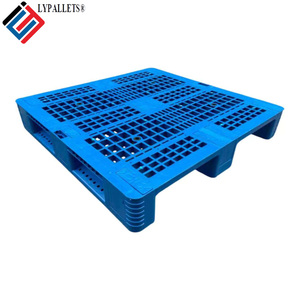
For high-bay beam racking systems, high-density runner pallets are embedded with hot-dipped zinc-galvanized steel tubes inside the deck and runners. This mitigates creep strain, minimizes flex under long-term sustained loading, and prevents structural sagging.
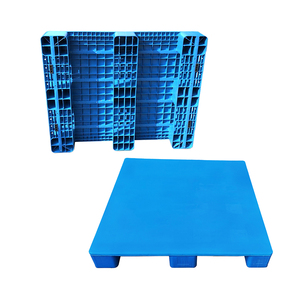
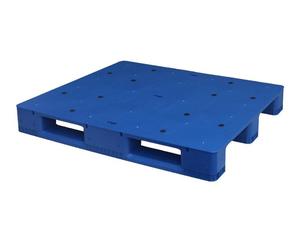
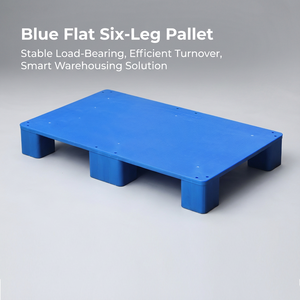
Designed specifically for pharmaceutical processing and food safety (FDA/HACCP aligned), smooth flat-top plastic pallets eliminate dirt pockets, liquid retention, and bacterial breeding zones. They are fully washable via high-pressure hot water sanitization (CIP).
Selecting the optimal plastic pallet architecture requires matching product characteristics with material handling equipment (forklifts, AGVs, motorized pallet jacks, gravity roller conveyors). Below is a comprehensive engineering comparison for supply chain procurement teams:
| Structural Type | Runner Configuration | Static Load (kg) | Dynamic Load (kg) | Racking Load (kg) | Primary Industrial Application |
|---|---|---|---|---|---|
| Flat Top Hygienic | 3 Runners / 6 Runners | 5,000 – 6,000 | 1,500 – 2,000 | 1,000 – 1,500 | Pharma Cleanrooms, Food & Beverage, Dairy Processing |
| Euro Heavy Duty Grid | 3 Runners (4-Way Entry) | 4,000 – 6,000 | 1,500 | 1,000 – 1,200 | Automotive Manufacturing, Bulk Chemicals, Heavy Logistics |
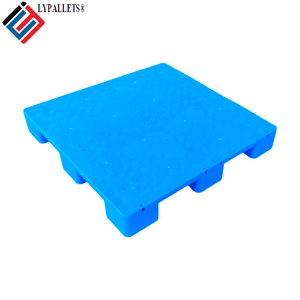
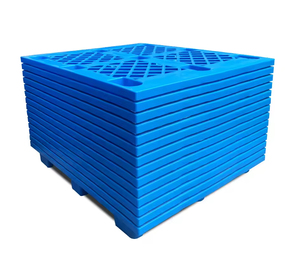
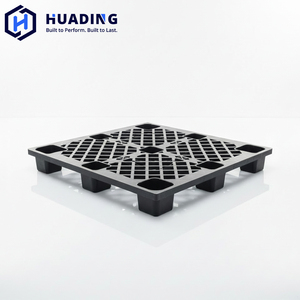
| Nestable Export Grid | 9 Feet (Feet Nesting) | 1,500 – 3,000 | 800 – 1,000 | Not Recommended | Air Freight, One-Way Shipping, Warehouse Space Optimization |
| Reversible Double Deck | Cross-Perimeter (Full Deck) | 6,000 – 8,000 | 2,000 | 1,200 – 1,500 | Flour Milling, Grain Stacking, Heavy Bag Stacking Operations |
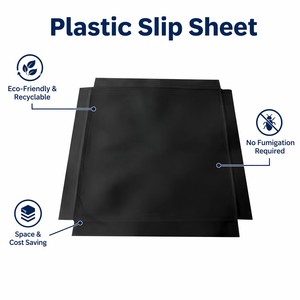
| Anti-Slip HDPE Slip Sheet | Flat Sheet (0.6 - 2.0 mm) | N/A (Push-Pull Attachment) | 1,000 – 1,500 | Specialized Racking | Containerized Freight Optimization, Ocean Cargo Cost Reduction |
The global logistics and material handling landscape is undergoing a massive structural shift away from single-use timber pallets toward reusable plastic platforms. Driving this transition are stringent global biosecurity mandates (ISPM-15 compliance), ESG (Environmental, Social, and Governance) corporate requirements, and the widespread adoption of automated logistics infrastructure.
1. Absolute Exemption from ISPM-15 Heat Treatment Mandates: Wooden pallets shipped across international borders require costly, time-consuming heat treatments or methyl bromide fumigation to prevent pest infestation. CE-certified plastic pallets are inherently immune to biological pests, allowing seamless cross-border customs clearance without certification delays.
2. Integration of RFID & IoT Real-Time Asset Tracking: Modern factory logistics rely heavily on item-level visibility. Our manufacturing process allows embedding passive RFID transponders, BLE (Bluetooth Low Energy) beacons, or GPS tracking tags directly into the plastic body structure during injection molding. This protects tracking electronics from severe shock impacts and moisture ingress during high-pressure washing.
3. Closed-Loop Circular Economy Models: Corporate sustainability targets demand end-of-life recycling guarantees. High-quality HDPE plastic pallets are 100% recyclable. At the conclusion of their 10+ year operational lifecycle, broken or retired plastic pallets are reground, re-pelletized, and remanufactured into new secondary-grade storage platforms, achieving a closed-loop zero-waste supply chain.
4. Total Cost of Ownership (TCO) Superiority: While the initial capital expenditure for a virgin plastic pallet exceeds that of a wooden alternative, plastic pallets deliver an operational lifecycle of 50 to 100+ trips compared to 3 to 5 trips for softwood pallets. When factoring in zero maintenance, reduced product damage, zero downtime in automated conveyors, and lower transport weights, plastic pallets reduce overall per-trip logistics costs by up to 65%.
With an extensive manufacturing footprint spanning high-tonnage precision injection molding presses (ranging from 800 to 4,000 tons), our factory produces thousands of standardized and customized pallet units daily. Engineered to serve rigorous multinational supply chains across North America, Europe, Southeast Asia, and the Middle East, our technical workflow ensures uncompromised quality.
Every production batch undergoes raw material melt-flow index testing, density validation, tensile strength verification, and strict dimensional tolerance checks to guarantee consistent structural performance.
Our plastic pallets are third-party certified for CE conformity, including ISO 8611 static/dynamic testing, corner drop impact resistance tests (-20°C to +40°C), bottom runner deflection, and rack shear strength testing.
We provide full structural customizability: anti-slip rubber grommets, custom color-coding for warehouse zoning, hot-stamped company branding, perimeter lip height adjustments, and steel tube reinforcing configurations.
Technical guidance and engineering answers for supply chain managers, warehouse directors, and international buyers.
Static Load refers to the maximum weight a pallet can support when resting on a flat, solid floor surface in a stationary position. Dynamic Load is the maximum capacity during transit when moved by a forklift or pallet jack. Racking Load represents the ultimate structural load capacity when the pallet is placed across a two-beam drive-in or selective pallet racking system supported only by its runners.
Yes. Plastic pallets manufactured using specialized Virgin High-Density Polyethylene (HDPE) with anti-cold impact additives operate seamlessly in deep-freeze environments down to -40°C. Unlike polypropylene (PP), which becomes brittle below freezing, HDPE maintains high impact strength and flexibility under extreme cold.
Anti-slip grommets are elastomeric plugs molded into both the upper deck surface and the bottom runners of the pallet. The top deck grommets increase friction between cardboard boxes or plastic crates and the pallet surface, preventing load shift during rapid acceleration or braking. The bottom runner grommets prevent the pallet from slipping off steel forklift tines or warehouse rack beams.
Absolutely. Precision injection-molded plastic pallets feature exact dimensional tolerances (±1mm), uniform weight distribution, and rigid structural runners. This prevents sensor misreads, chain jams, and roller derailment common with warped, broken, or dimensionally irregular wooden pallets in automated retrieval systems.
We produce conductive and anti-static plastic pallets by compounding carbon-black additives into high-grade polyolefins. This drops surface resistivity to 10^4 – 10^6 ohms, rapidly dissipating electrostatic charges and protecting sensitive microelectronics, semiconductors, and automotive circuit components during storage and transport.
HDPE Plastic Slip Sheets are ultra-thin (typically 0.6mm to 2.0mm) reusable plastic sheets used with push-pull forklift attachments. By eliminating standard 150mm pallet height and 15-25kg deadweight, slip sheets maximize ocean container loading volume by up to 15% while slashing outbound freight charges.
Consult with our senior technical engineering team today. We provide free warehouse layout planning, custom mold CAD designs, load testing reports, and competitive bulk factory quotes.
Send an Inquiry