Purpose-built for textile mills, garment manufacturing hubs, technical fabric converting plants, and 3PL fulfillment logistics. Every rack profile is structurally evaluated against bending strain, contact wear, and point-load compression.
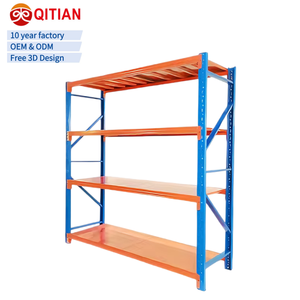
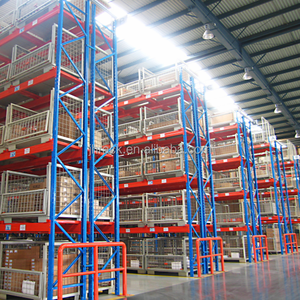
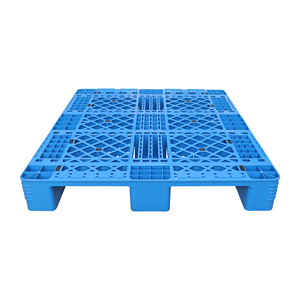
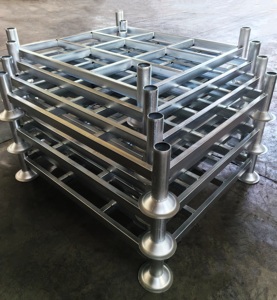
Textile rolls present a set of physical storage dynamics that standard pallet racks are ill-equipped to solve. A roll of high-density technical textile, woven denim, or non-woven industrial membrane concentrates intense dead load along a single tangential contact line. In standard floor-stacking or broad timber-decked racks, lower roll tiers suffer catastrophic core crush (collapse of cardboard or plastic internal tubes), fiber creasing, and selvage fringe fraying. As an established China top fabric roll rack manufacturer & factory, our structural engineering focuses on three essential mechanical targets: linear contact load dispersion, rigid deflection control (holding under L/300 deflection limits), and snag-free micro-radiused structural edges.
Our heavy-duty steel post pallet stillages and modular cradle-beam systems transfer the entire structural dead weight of the rolls onto external Q235B cold-drawn upright posts and heavy tubular horizontal beams. Rolls rest inside laser-beveled V-cradles or are suspended via central mandrel rods inserted into the core. By isolating each layer, air circulates uniformly across sensitive polyester, cotton, and technical elastomer materials, preventing humidity retention, mildew formation, and microclimate heat buildup in non-temperature-controlled export warehouses.
Selecting the optimal textile storage configuration requires aligning stock keeping unit (SKU) density with throughput frequency. Fast-moving apparel fabric lines require instant 100% selectivity, whereas base woven stocks benefit from high-density nested stillages or shuttle-automated lane structures.
| Racking Topology | Primary Application | Fabric Integrity Protection | Vertical Density | Picking Speed / Selectivity | Forklift / MHE Interface |
|---|---|---|---|---|---|
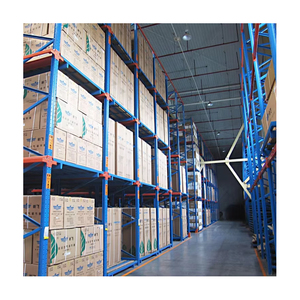
| Modular Steel Stillages (Post Pallets) | Raw greige fabric, rolled carpet, synthetic leather | Maximum (Zero Pressure) | Up to 6 Stacks High | Batch-level retrieval; excellent flexibility | Standard Counterbalance, Reach Truck |
| Selective Cantilever Roll Racks | Continuous bolt storage, varied roll lengths (1.2m - 4.5m) | Very High (Saddle Mounted) | Up to 9 Meters Clear | 100% Instant Individual SKU Access | Side Loader, Articulated Truck |
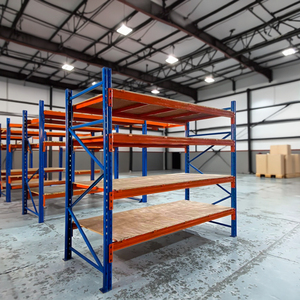
| Cradle-Fitted Pallet Racks | High-turnover apparel mills, dyeing plant buffers | High (Anti-Crease Saddles) | Multi-Level High-Bay | Single roll picking with mechanical cranes | VNA, Reach Truck, Overhead Hoist |
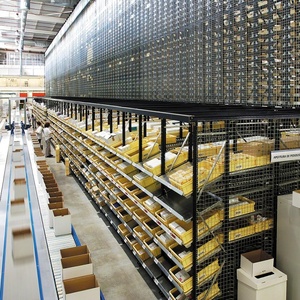
| Drive-In / Radio Shuttle System | Standardized bulk geotextiles, automotive textiles | Moderate to High (Palletized) | Deep-Lane High Density | LIFO or FIFO High-Throughput Runs | Automated Shuttle + Aisle Forklift |
Global supply chain shifts, sustainability metrics, and rapid warehouse automation are fundamentally reshaping how fabric handling equipment is specified, engineered, and purchased.
Textile mills are rapidly moving away from purely manual forklift operations. Forward-thinking procurement teams now specify fabric roll racks engineered with tight dimensional tolerances (±1.5mm) suited for automated guided vehicles (AGVs), autonomous mobile robots (AMRs), and crane-based ASRS carousels. Rigid rack framing with optical alignment targets reduces human intervention, eliminates edge strikes during high-speed insertion, and accommodates continuous 24/7 dark-store manufacturing environments.
Global apparel brands demand comprehensive scope 3 carbon audits across their subcontracted material supply chains. Modern procurement mandates the use of EAF (Electric Arc Furnace) recycled structural steel and heavy metals-free, low-VOC electrostatic thermoset polyester powder coatings. As an ISO 14001 aligned manufacturer, our eco-friendly passivation lines produce zero hexavalent chromium runoff while providing over 500 hours of ASTM B117 salt spray rust resistance in humid coastal weaving hubs.
Modern textile warehouses manage thousands of identical-looking fabric rolls with vastly distinct dye lots, GSM fabric weights, and shrinkage parameters. Buyers are seeking fabric racks equipped with integrated tag-nesting brackets, barcode scanning flags, and radio-frequency identification (RFID) reader brackets directly embedded into stillage corner posts. This turns passive structural steel into intelligent real-time data nodes, accelerating cycle counts and preventing costly fabric lot mixing.
How our continuous roll-forming lines, advanced robotic welding cells, and metallurgical innovations elevate warehouse safety and structural lifespan.
By transitioning critical load-bearing vertical columns from ordinary mild steel to niobium-vanadium micro-alloyed Q355B high-yield structural steel, our engineering team achieves a 28% increase in ultimate tensile capacity while reducing profile deadweight by 14%. Lighter, stronger posts reduce oceanic shipping freight costs per unit without sacrificing structural safety margins during seismic or impact loads.
Sharp edge burrs on sheet metal corners are the primary cause of fabric snagging and yarn pulls. Our latest production lines utilize 3D fiber laser cutting combined with robotic CNC tube hydroforming. Every beam cradle contact contour features a continuous 6mm radius (R6) curve, and can be outfitted with virgin nylon 66 rolling guides to allow seamless manual gliding of multi-ton fabric rolls without fabric chaffing.
Vertical stability is critical when stacking heavy post pallets 4 to 6 levels high under dynamic factory vibrations. We have engineered forged, stamped inverted-funnel foot cups with steep 45-degree self-aligning entry angles. Forklift operators drop upper tiers safely into place with zero lateral sway, achieving full seismic compliance under AS 4084 and FEM 10.2.02 international warehousing standards.
We combine in-house robotic production, bespoke structural layout consultation, and proven multinational project execution to deliver certified turnkey storage systems.
Eliminate broker markups and delayed communication. We operate continuous automated roll-forming machines, dual-station OTC robotic welding gantries, and automated shot-blasting powder coating production lines, outputting hundreds of metric tons monthly with full batch material test certificates (MTC).
Every fabrication batch undergoes strict structural inspection: raw steel metallurgical spectroscopy, ultrasonic weld defect testing, dry film thickness (DFT) gauges checking 70-90µm powder coats, and static overload testing to 1.5x nominal load limits prior to container loading.
Our engineering team reviews your architectural floor plans, ceiling beam clearances, sprinkler layouts, forklift turning radiuses, and roll weight profiles. We deliver complete 2D/3D CAD layouts, loading distribution charts, and calculation documents before project commitment.
Our engineering execution covers demanding multinational brands, including successful automated high-bay warehouse installations for Sony EMCS, regional distribution hubs across Southeast Asia, Malaysia, and Singapore, and containerized bulk exports worldwide.
Export steel profiles are wrapped in corrugated protective film, edge-guarded with angle protectors, and nested into heavy-duty transport cassettes to ensure zero abrasion or bending damage during oceanic container transit. Custom strapping permits fast uncrating on site.
From initial design consultation to installation supervision, anchor bolt torque calibration, safe load signage supply, and structured annual maintenance/inspection protocols, we ensure your storage assets maintain full compliance throughout decades of high-volume cycling.
Critical engineering considerations, loading parameters, and international delivery specifics answered by our structural design department.
The beam span depends on maximum roll length plus 100mm clearance on each end to prevent forklift tine abrasion. For beam load ratings, we calculate uniformly distributed loads (UDL) while applying an L/300 deflection limit (e.g., maximum deflection ≤ 9mm on a 2700mm beam under peak load). For delicate textiles, we integrate continuous roll cradle channels with an arc radius matching your roll diameter to spread point weight over broad surface areas.
Cantilever racks are permanently bolted to your concrete slab and provide 100% immediate selectivity for individual rolls via overhead cranes or side-loading forklifts. Stackable post pallets (stillages) are modular units that nest together when empty and stack 4 to 6 tiers high when full. Stillages offer incredible seasonal flexibility, allowing you to reconfigure your warehouse floor or load filled stillages directly into shipping containers without re-handling rolls.
We use a 7-stage automated chemical pre-treatment system followed by zinc-phosphate passivation and high-voltage electrostatic polyester powder spraying baked at 200°C. The cured surface achieves a smooth 70-90 micron dry film thickness with zero pinholes, micro-burrs, or raw solvent traces. It passes 500-hour salt spray tests and will never stain, scuff, or leave chemical residue on pristine white or sensitive synthetic fabrics.
Yes. We engineer customized deep-lane pallet shuttle racking and automated storage and retrieval system (ASRS) racks tailored specifically for cylindrical goods. By welding precision guide rails and heavy-duty roll cradles onto specialized heavy pallet frames, automated radio shuttles can safely retrieve palletized fabric rolls deep within storage lanes, dramatically cutting labor overhead and maximizing cube density.
When stacking post pallets 4 to 6 tiers high, each corner post foot applies concentrated point loads onto the warehouse slab. We recommend a reinforced concrete floor with a minimum compressive strength of 25–30 MPa (C25/30 rating) and an overall thickness of 180mm to 250mm, depending on soil compaction and sub-base stability. For softer floors, we supply oversized, reinforced steel base spreaders that distribute the vertical load safely across broader slab areas.
Standard production lead time is 15 to 25 calendar days for a typical 40ft High Cube container order (approx. 200-300 post pallets or full warehouse racking bays). All upright posts, beams, and cradles are bundled with high-tensile steel banding, wrapped in heavy polyethylene film, and supported by heavy-duty steel skid runners for rapid forklift unloading at destination ports, preventing any transit shifting or metal-on-metal scratching.
Connect directly with our engineering team for professional CAD layout designs, structural load calculations, and competitive direct-from-factory volume quotes tailored to your exact roll specifications.