Engineered for high-frequency intralogistics, robotic cells, structural building columns, and dock portals. Each model is manufactured from high-yield structural steel or advanced elastic polymers to eliminate concrete slab tear-out.
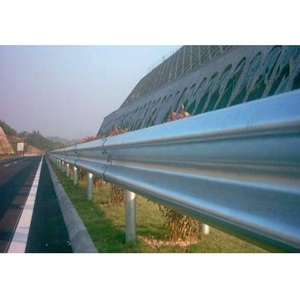
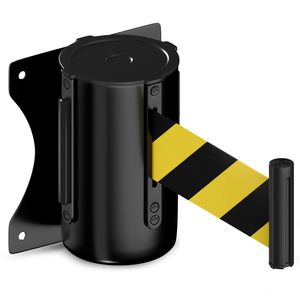
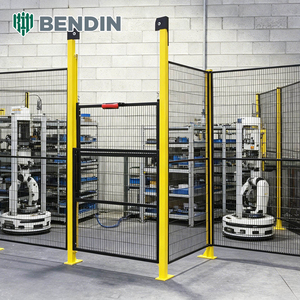
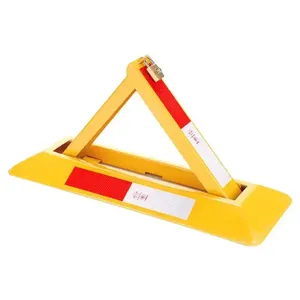
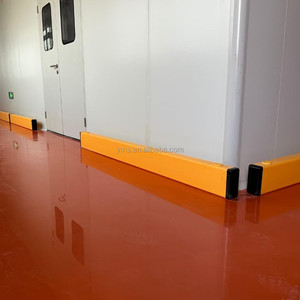
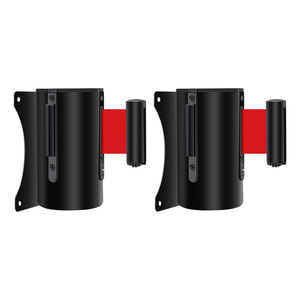
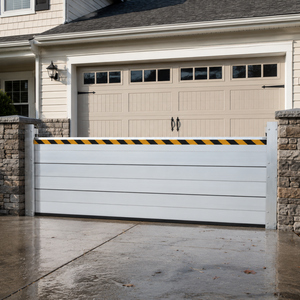
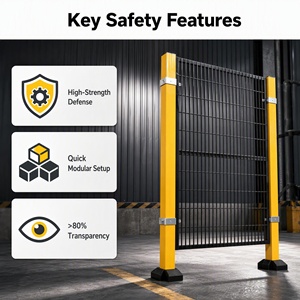
A rigorous structural analysis examining kinetic impact calculations, floor anchoring shear stress, and post-impact maintenance lifecycles across modern supply chain facilities.
For decades, standard warehouse procurement prioritized structural carbon steel (such as Q235B or ASTM A36) for impact barriers. However, physics reveals a fundamental operational flaw: rigid steel possesses negligible elasticity. When a 5-ton counterbalance forklift traveling at 10 km/h impacts a rigid steel post, kinetic energy ($E_k = \frac{1}{2} m v^2$) must instantaneously transfer somewhere.
Because the steel cannot deflect elastically without permanent plastic deformation, up to 90% of the kinetic energy propagates straight into the floor anchors. This causes shear failure of concrete expansion bolts, severe slab cracking, and structural tearing of the warehouse concrete sub-base. Remediation requires chemical re-anchoring, downtime, and expensive slab patching.
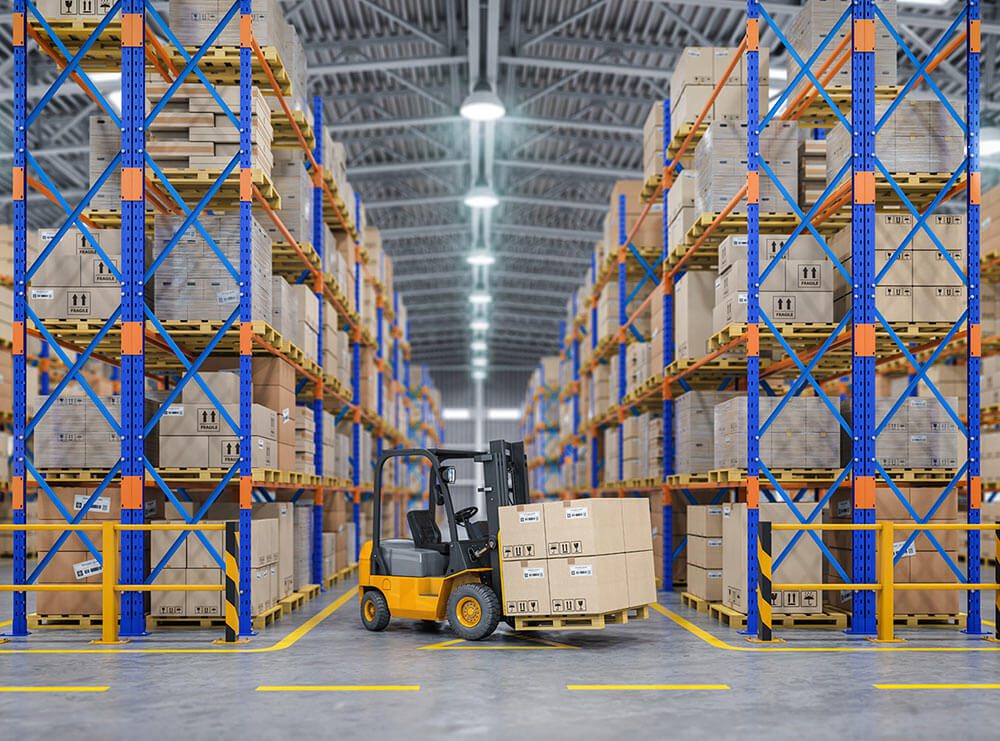
Our advanced flexible safety barriers employ proprietary high-density polyethylene (HDPE) and elastomeric polyurethane polymers. Engineered with internal multi-chambered shock cores, our polymer barrier systems deflect proportionally upon impact, decelerating the moving vehicle over a measured stroke distance.
This kinetic transformation converts mechanical energy into harmless elastic potential and minor thermal dissipation. Following impact, the material's viscoelastic memory enables 100% self-recovery to its original upright geometry without post-yield fatigue.
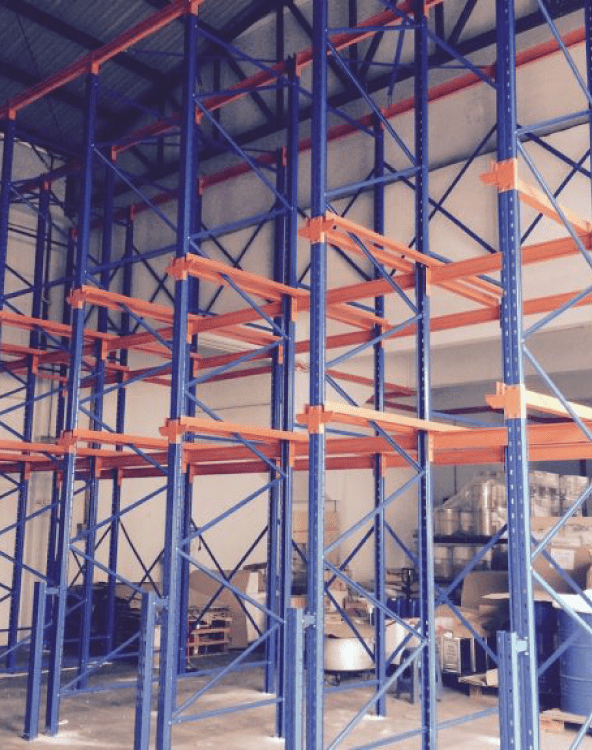
| Performance Characteristic | Rigid Carbon Steel Barrier (Q235B) | Flexible Modified Polymer (HDPE) | Industrial Machine Fence (Mesh) |
|---|---|---|---|
| Primary Energy Dissipation Mode | Plastic deformation & anchor shear | Elastic deflection & multi-core absorption | Tensile mesh deflection & frame damping |
| Energy Absorption Capacity | 6,000 – 12,000 Joules (Fixed limit) | 14,000 – 28,500+ Joules (Certified) | 1,200 – 3,500 Joules (Pedestrian/Tool) |
| Concrete Slab Impact Transfer | High (~85% transferred to floor bolts) | Negligible (<10% transferred to floor bolts) | Low (Bolted base with shear gussets) |
| Post-Impact Reusability | Zero (Requires flame cutting/replacement) | 100% Instant elastic geometric return | Panel replacement if yield exceeded |
| Chemical & Cold Resistance | Corrodes if scratched; brittle < 0°C | Inert to acids/salts; rated to -35°C | Powder-coated or galvanized surface |
| Compliance Standards | GB 50017 / ASTM A36 | PAS 13:2017 / OSHA 1910.144 | EN ISO 14120 / ISO 13857 / CE |
| Total Cost of Ownership (5-Year) | High (Frequent repairs, floor downtime) | Lowest (Virtually maintenance-free) | Low (Targeted perimeter cell isolation) |
Modern procurement officers analyze plant safety beyond purchase price. Evaluating capital expenditure against lifecycle maintenance costs avoids premature capital replenishment.
While bare steel barriers initially present a 15–25% lower upfront purchase price, their operational expenditure skyrockets by Year 2. Forklift micro-impacts fracture paint coatings, peel floor anchor threads, and bend cross-rails. Flexible polymer barriers eliminate repainting, structural bolt re-drilling, and equipment downtime—yielding complete ROI within 18 months of intensive logistics operations.
The British Standards Institution's PAS 13:2017 is globally recognized as the benchmark code of practice for safety barrier impact testing. Sourcing barriers lacking standardized dynamic testing leaves warehouse directors vulnerable during occupational health and safety liability audits. Our products undergo third-party pendulum and dynamic vehicle crash validations to certify exact Joule impact capacities.
Replacing damaged concrete slab sections in an active fulfillment center costs up to five times more than the barrier itself. When concrete spalls or cracks at anchor points, entire rack bays must be quarantined. Engineered flexible polymer barriers use mechanical stress-relief bases that isolate the concrete from catastrophic shear forces, ensuring the foundation remains intact.
As logistics facilities transition to autonomous mobile robots, automated storage and retrieval systems (ASRS), and rigorous ESG frameworks, safety infrastructure is fundamentally transforming.
The rapid proliferation of Autonomous Mobile Robots requires dedicated mixed-traffic segregation. Future-proof barriers feature calibrated sensor reflectors, low-profile ground skids to prevent automated chassis wedging, and non-magnetic polymer structures that do not interfere with LiDAR or SLAM guidance systems.
Next-generation barriers incorporate embedded tri-axial piezoelectric accelerometers and RFID load cells. When a collision occurs, the barrier automatically transmits kinetic telemetry, date-time logs, and incident alerts to the warehouse management system (WMS), identifying forklift operator training needs immediately.
Global logistics REITs and corporate operators require verified Environmental Product Declarations (EPDs). Sourcing is shifting decisively toward 100% recyclable polyolefin compounds and carbon-neutral powder-coated structural steel that support Scope 3 corporate decarbonization targets.
Static, permanently embedded guarding is being replaced by modular quick-release bayonet mechanisms. This allows maintenance teams to temporarily remove barrier sections within 60 seconds for seasonal machinery repositioning, floor scrubbing, or rapid warehouse reconfiguration.
Backed by decades of industrial manufacturing, robotic fabrication cells, and comprehensive test beds, our factory delivers unmatched OEM/ODM reliability to global distribution hubs.
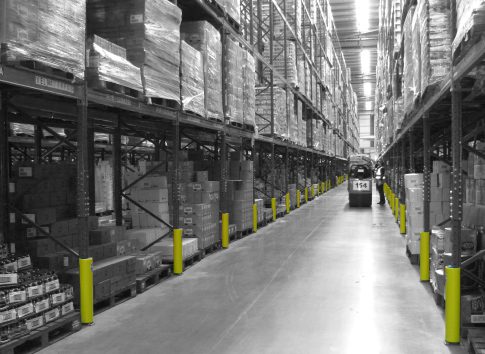
We control every phase of manufacturing in-house. From raw raw polymer compounding and specialized UV masterbatch blending to 12,000-watt fiber laser cutting of structural carbon steel, our manufacturing tolerances guarantee consistent dimensional precision and metallurgical integrity.






Detailed technical, regulatory, and logistics answers compiled by our senior structural and materials engineering team to support your tender preparation.
Impact energy is governed by the standard kinetic formula $E_k = \frac{1}{2} m v^2 \times (\sin\theta)^2$, where $m$ equals the gross vehicle mass (forklift plus loaded pallet, commonly 4,000 kg to 6,500 kg), $v$ is the maximum vehicle velocity in meters per second (10 km/h is approx. 2.78 m/s), and $\theta$ is the angle of impact. An operational 5-ton forklift striking perpendicular ($\theta = 90^\circ$) generates approximately 19,300 Joules. Our barrier systems are calibrated to resist 14,000 J, 20,000 J, or 28,500+ J based on aisle speed limits.
For high-load flexible polymer barriers and heavy-duty steel bollards, the concrete floor slab must have a minimum compressive strength of 25 to 30 MPa (C25/30 or 3,500–4,000 PSI) with an uncracked depth of at least 150 mm to 200 mm. We supply certified chemical expansion anchors or multi-seal screw anchors (Hilti / Fischer grade) engineered to prevent edge spalling and withstand dynamic tensile pull-out forces during full impact deflection.
OSHA 1910 (specifically 1910.144 and 1910.28) defines general safety requirements, color coding, and minimum dimensional limits (e.g., standard 42-inch guardrail heights and 200-pound lateral point loads for pedestrian fall protection). In contrast, PAS 13:2017 is an exacting engineering code specifically tailored to industrial vehicle traffic management, specifying dynamic test protocols, impact velocity ranges, energy dissipation calculations, and anchor stress limits.
Yes. Our column protection systems feature modular segmented sections with adjustable locking ratchets or heavy-duty velcro/mechanical bands. They accommodate universal square, rectangular, and H-beam steel structural columns ranging from 150 mm up to 500 mm in profile width. The multi-chamber internal hollows compress incrementally, ensuring energy dissipation regardless of column flange geometry.
Standard PVC and low-grade plastics experience brittle fracture when operating below freezing. Our cold-chain barriers are synthesized from an ultra-high molecular weight elastomer-modified polyolefin compound that maintains ductile elasticity down to -35°C (-31°F). The material will not shatter, splinter, or lose energy recovery under forklift impacts in sub-zero freezers.
For external perimeters, loading docks, and corrosive environments, we employ hot-dip galvanizing compliant with ASTM A123 / ISO 1461, achieving a minimum zinc coating thickness of 85 microns. For indoor robotic cells and machinery fences, we apply an automated electrostatic polyester powder coat over a 5-stage iron/zinc phosphate wash, passing 1,000 hours of continuous salt-spray testing (ASTM B117).
Standard modular catalog items maintain a rolling factory inventory with dispatch ready within 5 to 7 business days. Custom OEM orders—involving tailored post heights, custom baseplates, specialized mesh aperture dimensions, or bespoke corporate color finishes—typically require 14 to 20 days. Minimum Order Quantities (MOQ) start as low as 10 to 20 units for standard products to support project-specific trials.
We engineer our barrier rails, posts, and fence panels for high-density nesting. Upright posts, baseplates, and modular rails are packed in reinforced, fumigated steel-strapped wooden crates or pallets. This flat-pack nesting approach maximizes 40-foot High Cube (40HC) container cube utilization up to 92%, substantially reducing transoceanic freight costs per linear meter of safety barrier.
Send us your warehouse CAD layout, forklift operating weights, and zone safety requirements. Our certified structural engineers will generate a complimentary impact analysis, barrier layout proposal, and factory-direct quotation within 24 hours.