Explore precision-fabricated OEM pallet conversions, cold-rolled structural storage systems, and stackable steel units designed for automated transit and space-critical distribution centers.
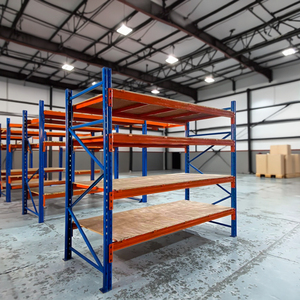
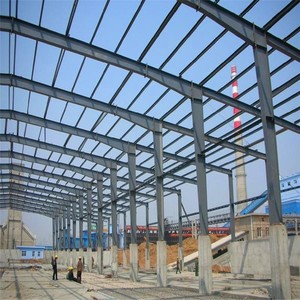
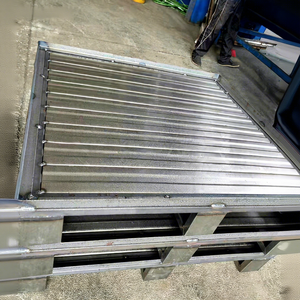
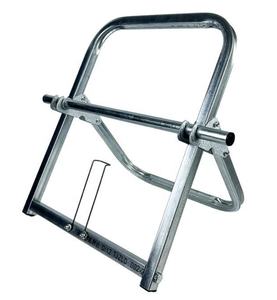
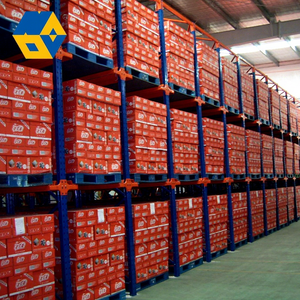
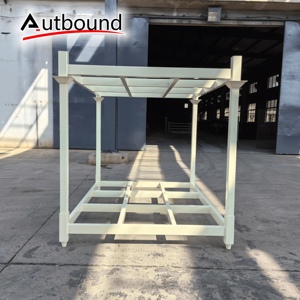
In modern high-density warehousing, logistics facilities face an ongoing challenge: how to retain irregularly shaped, compressible, or fragile stock without investing millions into static selective pallet racking infrastructure. As a specialized custom OEM pallet converter factory and exporter, we manufacture demountable, foldable, and fixed steel pallet converters that turn standard flat wooden or plastic pallets into rigid, stackable containment units.
A pallet converter (often referred to in heavy industry as a pallet stillage, post retention collar, or pallet cage converter) acts as a self-supporting vertical frame. It transfers the entire superimposed static and dynamic load through cold-formed tubular steel uprights directly down to the footplates, entirely bypassing the fragile merchandise beneath. By shielding goods from compressive crushing forces, our OEM solutions allow facilities to stack bulk goods 3 to 6 tiers high directly on the warehouse floor, liberating up to 300% of dormant vertical volume.
We source heavy-gauge carbon steels (GB/T Q235B, Q355B, and equivalent ASTM A36) featuring certified yield points up to 355 MPa, ensuring deflection resistance under catastrophic impact loads.
Designed with an engineered 4:1 or 6:1 return nesting ratio, our folding converters significantly decrease reverse logistics freight expenditure during empty transit and ocean container return.
Available in hot-dip galvanization conforming to ISO 1461 and electrostatic thermoset TGIC-free polyester powder finishes optimized for cold chain blast freezers operating down to -30°C.
Over the last decade, industrial supply chains have shifted dramatically from rigid, fixed-location storage assets toward ultra-flexible, modular physical systems. Enterprise procurement heads and supply chain architects are transitioning their budgets toward pallet converters for several quantifiable structural reasons:
| Evaluation Parameter | Fixed Selective Pallet Racking | OEM Modular Pallet Converters | Bulk Floor Stacking (Unassisted) |
|---|---|---|---|
| Capital Expenditure (CapEx) | High (Civil anchoring, uprights, engineering certifications) | Low to Moderate (No floor civil anchoring required) | Zero Initial Investment |
| Spatial Flexibility | Static (Aisles and bays are fixed to slab positions) | 100% Dynamic (Rearrangeable overnight for peak cycles) | Flexible but limited to self-supporting cargo |
| Vertical Cubic Utilization | High (Up to facility clear roof height) | High (Configurable 3–5 tiers stackable) | Extremely Low (Crushing risk limits height) |
| Cargo Protection Profile | Full Isolation (Beams carry package weight) | Full Isolation (Corner posts bypass bottom cartons) | Zero Protection (Direct compressive load transfer) |
| Leased Facility Adaptability | Poor (Requires slab remediation upon de-lease) | Excellent (Asset relocates with zero building footprint) | Neutral |
Modern global logistics buyers demand agile equipment that accommodates the seasonal velocity shifts of e-commerce packaging, multi-SKU retail rollouts, and intermediate manufacturing buffer inventory. As cross-dock operations eliminate staging bottlenecks, pallet converters serve as universal handling vessels that transition seamlessly from long-haul flatbed trailers directly into high-density block-stack formations.
The convergence of Automated Guided Vehicles (AGVs), Autonomous Mobile Robots (AMRs), and enterprise WMS systems is redefining the physical specifications of post pallets and retention frames. Pallet converters are no longer static weldments; they are becoming precision-aligned machine interfaces.
Manual welding tolerances (±3.0mm) cause AMR optical navigation faults. Our OEM factory utilizes 5-axis 3D tube lasers and automated robotic welding cells to achieve tolerances within ±0.75mm for seamless automated pick-and-place handling.
High-value industrial supply chains increasingly request built-in recesses for Bluetooth Low Energy (BLE) asset beacons, RFID transponders, and LoRaWAN sensors to monitor temperature, humidity, and location throughout intermodal journeys.
By leveraging advanced micro-alloyed ultra-high-strength steel grades, modern pallet converters achieve a 20% reduction in tare weight while preserving a uniform 1,500 kg dynamic payload capacity, lowering global container shipping weight.
Backed by over two decades of technical racking and industrial manufacturing experience, our engineering facility operates as both an autonomous volume manufacturer and a trusted OEM subcontractor. We translate complex facility blueprints into precision-manufactured steel assets.
We eliminate trading middleman markups. From cold-roll forming, coil shearing, and precision punching to robotic welding and powder coating, our fully integrated footprint ensures consistent batch-to-batch quality control under single-source contracts.
Our quality and environmental management systems govern every weld seam and chemical pre-treatment cycle. Rigorous finite element analysis (FEA) simulations and dynamic destruct testing validate safety load limits across all designs.
Having completed heavy industrial installations for multinational corporations across Asia-Pacific—including high-profile installations for Sony EMCS, Adidas, and CEVA Logistics—we handle complete export logistics, packing, and documentation with reliability.
Procuring custom pallet converters for major warehousing projects requires strict engineering diligence. Below are authoritative answers to common inquiries encountered by industrial engineers and procurement specialists.
Load calculation depends on post wall thickness, column section profile, stacking height, and steel grade. Every custom OEM converter is calculated with a minimum 2.0x safety factor over uniformly distributed loads (UDL). For example, a converter rated at 1,000 kg dynamic payload is tested to support a 2,000 kg static load when stacked 4 tiers high.
Yes. While we regularly manufacture models for standard Euro-pallets (1200x800mm), ISO standard pallets (1200x1000mm), and North American pallets (48x40in), over 60% of our orders feature bespoke base clamping configurations suited for specialized plastic, aluminum, or custom industrial wooden skids.
For standard dry warehousing, electrostatic epoxy-polyester powder coating (60–90 microns) offers excellent abrasion and impact resistance. For external yard staging, marine shipping, or sub-zero cold room environments, we mandate hot-dip galvanization (HDG) per ISO 1461/ASTM A123, ensuring over 25 years of corrosion-free performance.
Our collapsible and demountable designs utilize nesting corner cups and removable posts. A 40ft high-cube ocean container can accommodate up to 450 to 550 nested converter sets compared to fewer than 90 rigid welded stillages, reducing cross-border sea freight costs per unit by up to 75%.
Every commercial production batch is supplied with certified Mill Test Certificates (MTCs) for raw steel coils, chemical pre-treatment and powder adhesion cross-hatch reports, weld ultrasonic/visual inspections, and static deflection testing certificates confirming zero permanent deformation under test loads.
Prototyping and custom CAD/SolidWorks engineering drawings require approximately 5 to 7 working days. Once client sign-off is confirmed, initial OEM prototypes are delivered within 12 days. Full container load (FCL) volume production runs typically ship within 20 to 30 days from official contract confirmation.
Connect directly with our senior structural engineers to review your load dynamics, calculate pallet dimensions, and receive an itemized manufacturing quotation alongside complete SolidWorks 3D engineering models.
Contact Us