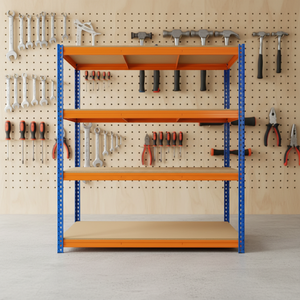
Engineered to international structural standards (EN 15512, RMI, AS4084). Select a standard structural configuration or request tailored OEM/ODM dimensional parameters.
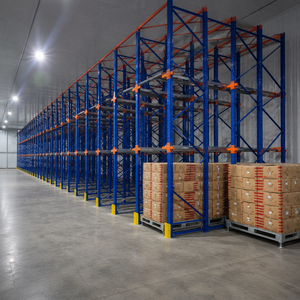
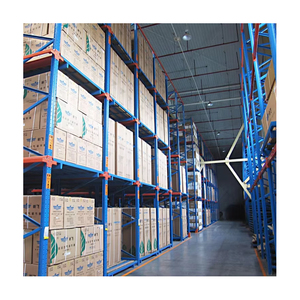
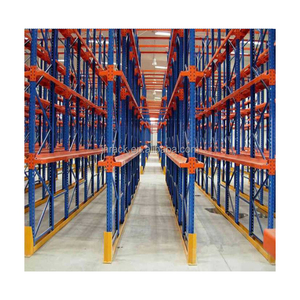
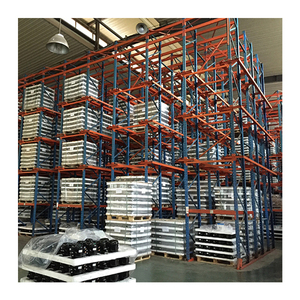
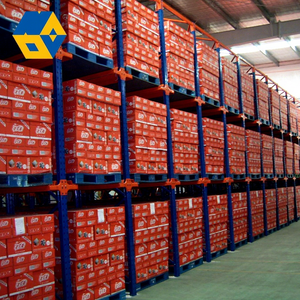
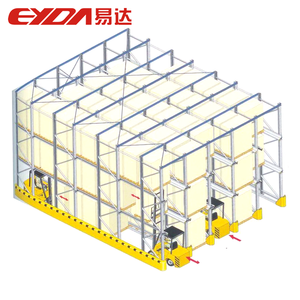
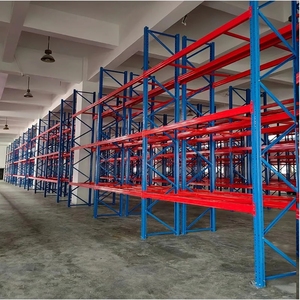
As an industry-leading manufacturer and international exporter of high-density warehouse storage systems, our facility specializes in full-scope OEM (Original Equipment Manufacturer) and ODM (Original Design Manufacturer) services. We design, cold-roll, weld, surface-treat, and export heavy-duty drive-in pallet racking systems tailored precisely to client load profiles, facility dimensions, and material handling fleet specifications.
Operating under strict ISO 9001:2015 Quality Management Systems and ISO 14001:2015 Environmental Management Standards, our engineering team utilizes certified structural steels (Q235B and high-strength Q355B) to engineer racking networks capable of supporting up to 2,000 kg per pallet position across multi-tiered elevation profiles.
Precision multi-stage continuous roll-forming mills ensure continuous structural upright columns without micro-fractures, maximizing load bearing capacity and axial stiffness under extreme loading conditions.
Robotic MIG/TIG welding workstations construct cantilever load arms, top bracing systems, and floor-anchored guide rail brackets with consistent weld penetration verified via ultrasonic testing.
Automated 9-stage pre-treatment wash followed by thermosetting epoxy-polyester powder coating (60-80 microns) or Hot-Dip Galvanizing (HDG) per ISO 1461 for maximum corrosion resistance in sub-zero environments.
Drive-In and Drive-Thru racking systems operate on high-density principles that drastically reduce forklift aisle requirements. While Drive-In Racking utilizes a single entry point operating on a First-In, Last-Out (FILO) inventory flow, Drive-Thru Racking incorporates dedicated entry and exit faces to enable a First-In, First-Out (FIFO) logistical model.
Unlike standard selective rack structures that rely on horizontal shelf beams to tie upright frames together, Drive-In systems rely on continuous side-mounted cantilever support rails. Because forklift trucks navigate inside the storage lanes, structural rigidity is achieved through heavy-duty top bracing trusses, rear vertical portal bracing (in Drive-In configurations), and ground-anchored structural floor guide rails.
| System Attribute | Drive-In Racking (FILO) | Drive-Thru Racking (FIFO) | Selective Pallet Rack |
|---|---|---|---|
| Storage Density | Very High (Up to 85%) | Very High (Up to 80%) | Moderate (35% - 40%) |
| Pallet Selectivity | Low (Lane-Level Access) | Low-Moderate (Batch Access) | 100% Immediate Access |
| SKU Diversity Fit | Best for High-Volume, Low-SKU | Best for High-Volume, Date-Sensitive | Best for High-SKU Diversity |
| Forklift Aisle Requirement | Single Perimeter Aisle | Dual Perimeter Aisles (Entry/Exit) | Multiple Interstitial Aisles |
| Structural Bracing | Top Bracing + Rear Portal Bracing | Top Bracing (No Rear Bracing) | Standard Frame Horizontal/Diagonal |
| Cold Storage Efficiency | Maximum (Reduces Cube Volume) | High (Optimized Batch Turnover) | Low (Wasted Refrigerated Air Space) |
All OEM customized rack components supplied by our factory undergo rigorous Finite Element Analysis (FEA) to simulate static structural dead loads, live dynamic forklift contact forces, and seismic acceleration forces (per rack safety standards FEM 10.2.02 and EN 15512). Deflection criteria are restricted to less than L/200 under maximum design load limits, ensuring safe, long-term operation under demanding industrial warehouse duty cycles.
As global supply chains shift toward automation, decarbonization, and space optimization, logistics managers and global enterprise buyers are re-evaluating their procurement criteria for heavy-duty drive-in racking. The key trends shaping the next decade of warehouse storage procurement include:
Modern buyers demand OEM drive-in systems manufactured with ultra-precise floor-anchored steel guide rails and optical alignment targets compatible with Automated Guided Vehicles (AGVs) and Autonomous Mobile Robots (AMRs), minimizing human operator error and equipment impact.
With electricity costs impacting cold storage profitability, drive-in systems are rapidly replacing selective racks in sub-zero environments (-25°C to -30°C). Maximizing pallet density reduces the cubic air volume requiring refrigeration, directly cutting warehouse carbon footprints.
Global procurement offices are transitioning from standard Q235 structural steel toward micro-alloyed Q355B high-yield steels. This allows thinner gauge profiles to maintain identical structural capacity, reducing shipping weight, freight tariffs, and raw material consumption.
Structural drive-in racking engineering is advancing rapidly beyond passive steel assemblies. Leading export manufacturers are incorporating technical innovations such as:
Direct technical answers to common engineering, logistics, and OEM contract queries raised by project procurement teams and warehouse operations managers.
Standard factory production lead time is 25 to 35 calendar days following structural shop-drawing approval and raw material batch testing. Custom powder coat matching or hot-dip galvanizing per ISO 1461 may add 5-7 days depending on total project tonnage.
In Drive-Thru systems (where rear vertical bracing cannot be used due to FIFO forklift pass-through), structural stability is guaranteed by increasing column profile depth, utilizing heavy-duty top portal bracing trusses, and installing floor-anchored structural steel guide rails to tie column bases rigidly to the concrete floor slab.
We recommend a minimum reinforced concrete floor slab thickness of 150mm to 200mm with a compressive strength rating of at least C25/C30 (25-30 MPa). Sub-floor flatness must comply with FM2 or Superflat standards (per TR34 specifications) to prevent forklift mast tilt during deep lane entry.
Every export container shipment includes complete EN 10204 3.1 Raw Material Mill Test Certificates, ISO 9001 quality audit reports, powder coating thickness test logs, and structural design compliance certificates signed by accredited structural engineers.
Yes, our factory operates specialized custom roll-forming tooling capable of producing standard 50mm, 75mm, 76.2mm pitch profiles, as well as American Teardrop pattern profiles for seamless integration into existing distributor racking inventories.
Consult with our structural engineering team today. We provide CAD layout engineering, load calculations, and competitive factory-direct export pricing within 24 hours.
Inquire Now