A comprehensive inventory of structural steel mezzanine platforms, heavy logistics racking, wire handling equipment, pallet containment, and machine safety guarding manufactured in adherence to ISO 9001 and CE directives.
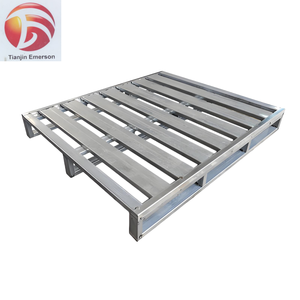
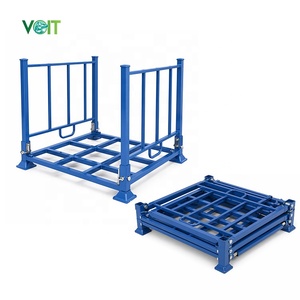
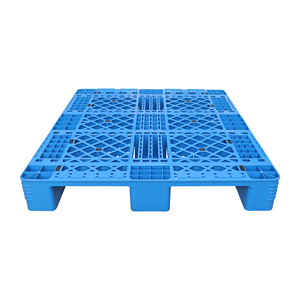
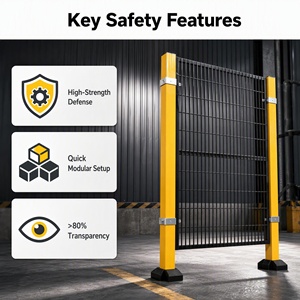
In modern automated distribution hubs and cantilever racking environments, the pallet racking system acts as a slender compression structure. Under full vertical load, industrial rack frames are susceptible to Eulerian buckling failure when exposed to asymmetrical lateral dynamic impacts. Statistical analyses from OSHA (Occupational Safety and Health Administration) and European Standard EN 15635 (Steel Static Storage Systems - Application and Maintenance of Storage Equipment) indicate that over 82% of structural rack collapses initiate not at the mid-beam level, but at the lowest 400 millimeters of the aisle corner uprights.
A fully laden reach truck or counterbalance forklift weighing 4.5 metric tons operating at a modest transit velocity of 2.0 m/s possesses a kinetic impact energy profile calculated as \(E_k = \frac{1}{2}mv^2 \approx 9,000\text{ Joules}\). When an unshielded roll-formed rack upright takes direct contact from a moving forklift mast or load wheel, localized plastic deformation of the profile occurs instantaneously. A cross-sectional deflection exceeding merely 3.0 millimeters over an upright gauge length reduces the vertical load capacity by up to 50%, initiating progressive structural shedding and triggering catastrophic chain-reaction collapse of adjacent bays.
As a specialized China upright corner guard manufacturer, engineering rack protection demands understanding dynamic plastic hinge mechanisms, shear distribution into the concrete slab via chemical or mechanical expansion anchors, and energy attenuation geometries. Industrial upright corner guards serve as sacrificial or semi-permanent mechanical barriers, decoupling impact kinetic energy from the delicate load-bearing uprights and preserving storage integrity.
Procurement teams evaluating China upright corner guard manufacturers must weigh material properties against warehouse operational speeds, temperature cycles (such as cold-chain -30°C vs ambient dry goods), and floor anchorage conditions. Below is an engineering evaluation comparing the four primary guard variants manufactured across Chinese industrial clusters:
| Engineering Attribute | Heavy Formed Q235B / Q355B Steel | Ductile SG Cast Iron (QT450) | High-Density Polyethylene (HDPE/TPU) | Steel-Polymer Composite Hybrid |
|---|---|---|---|---|
| Yield Strength ($f_y$) | 235 – 355 MPa | 310 – 450 MPa | 22 – 35 MPa | Dual-phase progressive yield |
| Impact Absorption Mechanism | Controlled plastic bending + bolt shear | High compressive mass deflection | Elastic rebound + internal dissipation | Viscoelastic core + structural steel shell |
| Cold Storage Resilience (-30°C) | Requires Charpy V-notch tested grade (Q355D) | Brittle transition vulnerability | Subject to low-temperature embrittlement | Excellent; engineered cold elastomeric dampener |
| Floor Anchorage Shear Stress | High (transfers dynamic shock to anchor bolts) | Extreme (requires 4x M16 anchors minimum) | Minimal (snaps directly onto post, boltless) | Moderate (absorbed partially by elastomer buffer) |
| Aisle Footprint Intrusion | 120mm – 160mm radius from upright | 140mm – 180mm profile | Compact (fits tightly to 80-120mm column) | Balanced (100mm – 130mm clearance) |
| FEM 10.2.02 Compliance | Exceeds 400 J class easily (up to 12,000 J) | Certified heavy industrial class | Typically tested to 400 J – 1,000 J limit | Exceeds 10,000 J dynamic barrier testing |
For heavy-duty high-turnover logistics centers handling double-deep or drive-in racking, formed structural steel (Q235B/Q355) with 4.5mm to 6.0mm thickness remains the gold standard. Its predictable stress-strain yield curve ensures that severe collision forces deform the guard, dissipating kinetic energy before peak shockwaves propagate into the anchor bolts or reach the structural rack leg.
Global supply chain digitization and warehouse automation are rewriting the technical specifications of physical asset protection. Modern facilities with Automated Guided Vehicles (AGVs) and Autonomous Mobile Robots (AMRs) demand guard tolerances that legacy fabricators cannot satisfy.
Autonomous robot safety protocols require specialized corner guard geometries. Modern guards are engineered with bevelled 45° deflection planes and non-reflective, textured powder coatings to eliminate false-positive reflections on optical LiDAR, LiDAR-SLAM, and ultrasonic obstacle avoidance sensors.
Procurement is transitioning toward "Smart Upright Protectors" integrating internal tri-axial micro-electro-mechanical (MEMS) accelerometers. When an impact exceeding 2.5kN occurs, an immediate wireless alert (LoRaWAN/Bluetooth LE) triggers a maintenance inspection ticket in the Warehouse Management System (WMS).
Traditional guards bolted rigidly into concrete slabs commonly cause spalling, pulling out anchor cones during violent shear collisions. The latest Chinese manufacturing patents feature decoupled elastomeric shear bushings that flex up to 15 degrees, keeping floor slabs undamaged and reducing repair downtime.
Leveraging decades of production leadership across steel processing and structural storage engineering (operating to ISO 9001 and ISO 14001 benchmarks), we offer vertically integrated manufacturing that bridges custom mechanical fabrication, rapid CNC punching, certified welding, and high-performance finishing.
Equipped with 600-ton hydraulic press brakes and automated progressive stamping lines capable of cold-forming high-yield Q345/Q355 plates up to 10mm wall thickness with sub-millimeter precision.
Continuous automated pre-treatment surface shot blasting (Sa 2.5) followed by electrostatic outdoor-grade thermo-hardened polyester powder coat (80–120 µm) for exceptional chemical and scratch resistance.
Dynamic destructive and cyclic hydraulic load testing facilities verifying compliance with FEM 10.2.02, EN 15512, and OSHA safety factors before container dispatch.
Our engineering team generates site-tailored 2D/3D BIM families (Revit, SolidWorks, STEP) accommodating non-standard post profiles, baseplate cutouts, and corner clearances.
Proven execution across multinational logistics networks, manufacturing plants, and cold-storage operations across Malaysia, Singapore, Australasia, Europe, and North America (e.g. Sony EMCS projects).
A complete portfolio encompassing upright corner guards, column wraps, end-of-aisle structural crash barriers, wire mesh fencing, mezzanine systems, and heavy-duty steel pallets under one contract.
Key technical considerations regarding anchoring chemistry, floor slab integrity, standard heights, and regulatory inspections.
According to EN 15635 clause 8.4.2 and Australian standard AS 4084, an upright protector positioned at an aisle intersection must have a minimum vertical height of 400 mm. It must also be certified to absorb dynamic energy of not less than 400 Joules in both the front and lateral directions at an elevation between 100mm and 400mm.
For standard dry slabs exceeding 150mm depth of C25/30 concrete, M12 to M16 carbon steel torque-controlled wedge expansion anchors are common. However, for floor slabs near construction joints, perimeter slab edges, or within cold storage (-30°C) with under-slab insulation, chemical injection epoxy anchoring is strongly recommended to eliminate expansive bursting stress in the concrete.
While plastic or clip-on polymer guards snap directly onto the upright flange without floor drilling, structural engineering standards (FEM 10.2.02) favor floor-anchored independent steel guards for end-of-aisle positions. An independent guard maintains an air gap of 15–25mm from the upright, guaranteeing zero kinetic transfer to the load-bearing frame during heavy impacts.
VNA operations rely on turret trucks or wire guidance with tight turning radius tolerances. Our custom manufacturing facility produces low-profile chamfered corner wraps (L-shape and U-shape) with flush-counterbored anchor apertures that minimize aisle intrusion while providing structural shielding for 80mm, 90mm, 100mm, and 120mm upright profiles.
For ambient warehouses, shot blasting to Sa 2.5 with electrostatic thermoset polyester powder coating (standard Traffic Yellow RAL 1023 with black hazard chevrons) delivers durability. For cold storage, coastal sites, or food-grade washdown rooms, Hot-Dip Galvanizing (HDG) according to ISO 1461 with minimum 65–85 µm zinc layer thickness is recommended to prevent under-film corrosion.
Because we operate internal multi-axis laser cutting, CNC hydraulic braking, and robotic welding lines, custom dimensional tooling costs are non-existent for welded geometries. Standard custom production cycles range between 12 to 18 days for a full 40-foot container load (FCL), accompanied by mill material test certificates (MTC) 3.1.