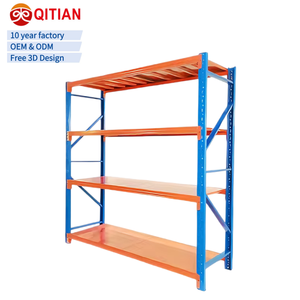
Top China Warehouse Storage Rack Factory & Supplier

Custom Heavy-Duty Industrial Racking, High-Density Radio Shuttle Systems & Certified Steel Mezzanine Solutions Engineered for Global Logistics Excellence

Manufacturing Authority & Engineering Rigor

Why Leading Global Logistics Hubs Source Racking from China

Combining prime Q235B/Q355B cold-rolled structural steel, certified robotic MIG welding, and rigorous ISO 9001:2015 quality assurance to deliver superior industrial storage reliability.

50,000+
Sqm Production Facility
Q355B
High-Tensile Certified Steel
ISO & CE
9001 / 14001 / AS4084 Compliant
65+
Global Export Markets

Advanced Structural Metallurgy

We utilize exclusively certified prime cold-rolled steel coils (Q235B and Q355B equivalent to SS400/S355JR). Continuous automated roll-forming guarantees uniform profile thickness, precise hole pitches, and superior tensile strength across all vertical uprights and load beams.

Global Engineering Standards

All warehouse racking layouts are subjected to Finite Element Analysis (FEA) computer modeling to ensure compliance with Australian AS4084-2012, European FEM 10.2.02, and American RMI safety directives. Systems are engineered for seismic resistance up to Zone 4.

Electrostatic Powder Coating

Our 220-meter automated powder coating line uses non-toxic, lead-free epoxy polyester thermosetting resins. Pre-treated with 9-stage phosphate washing, components achieve an 80–100 micron coating thickness, delivering exceptional scratch and rust resistance.

Technical Engineering Guide

Racking System Selection Matrix for Procurement Officers

Compare storage density, selectivity, pallet throughput speeds, and structural load metrics to identify the optimal racking configuration for your distribution center floor plan.

Racking Architecture Storage Density Pallet Selectivity Handling Machinery Typical Beam Deflection Best Application
Selective Pallet Rack Moderate (40-50%) 100% Direct Access Standard Counterbalance / Reach Truck < L/200 Under Max UDL High SKU variety, fast pick cycles, 3PL logistics hubs
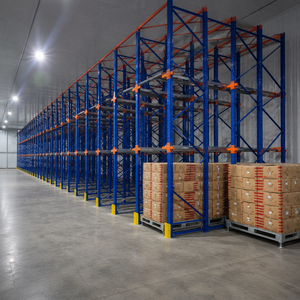
Drive-In / Drive-Thru High (75-85%) Low (FILO / LIFO) Counterbalance / Reach Truck < L/200 Under Max UDL Cold storage, bulk batch items, seasonal inventory
Radio Shuttle System Ultra-High (85-92%) Medium (FIFO or LIFO by lane) Automated Lithium Shuttle + Forklift < L/250 Precision Tolerances FMCG, beverage plants, automated deep-lane storage
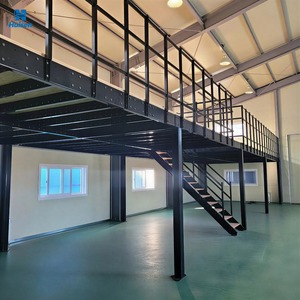
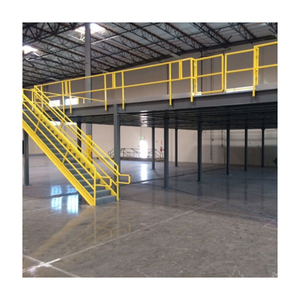
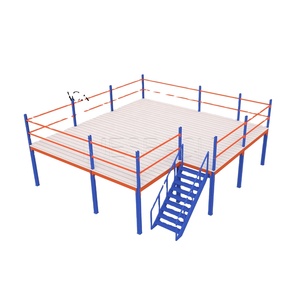
Steel Mezzanine Platform Doubles Floor Area 100% Floor Utilization Staircases, Freight Elevators, Pallet Gates Designed to 250–1000 kg/m² E-commerce order fulfillment, extra office space, assembly
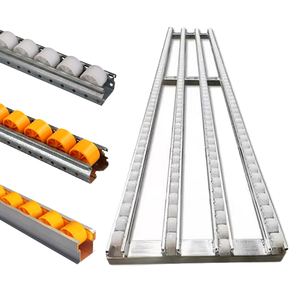
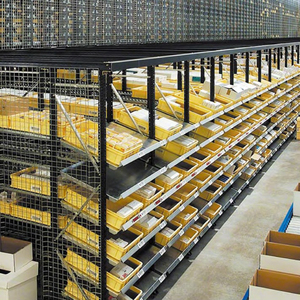
Carton Flow Sliding Racks High (Carton Pick) 100% SKU Front Access Manual gravity roller feed (FIFO) Custom Roller Rail Slope (3-5%) Kitting operations, pharmaceutical picking, assembly lines

Strategic Procurement Whitepaper: Maximizing Warehouse Cubic Efficiency with China Supply Chain Integration

Published by Executive SEO & Industrial Logistics Engineering Insights Group

1. The Paradigm Shift in B2B Storage Rack Manufacturing

In modern global supply chain logistics, warehouse real estate cost per square meter continues to climb rapidly across major trade hubs in North America, Europe, Southeast Asia, and the Middle East. As a result, industrial facility managers and procurement directors are pivoting away from standard floor-stacking and low-density storage toward vertical height maximization. China has solidified its position as the premier worldwide manufacturing epicenter for custom warehouse storage racks, combining economies of scale in steel production with cutting-edge robotic fabrication technology.

When sourcing heavy-duty racking systems, structural integrity and safety engineering cannot be compromised. Leading Chinese racking manufacturers operate under rigorous international quality frameworks, employing computer-controlled cold roll-forming machines capable of producing box beams, step beams, teardrop uprights, and omega-profile columns with micro-millimeter precision. By utilizing high-tensile Q355B structural steel, engineers can design thinner, lighter uprights that deliver equal or greater weight loading capacities (up to 30,000 kg per upright frame) compared to legacy hot-rolled alternatives.

2. Future Trends in B2B Warehouse Racking Procurement (2025–2030)

As logistics operations transition toward Industry 4.0 automation, the demand for traditional racking is evolving rapidly into semi-automated and fully automated hybrid storage environments. B2B buyers must anticipate several critical procurement trends when planning long-term capital investments:

  • Integration with Autonomous Radio Shuttles & AGVs: Traditional Drive-In racking is being retrofitted or replaced by deep-lane Radio Shuttle racking systems. These battery-operated shuttles traverse inside drive-in channels on specialized rails, controlled via wireless RF remotes or WMS software. This eliminates forklift entry into the rack lanes, reducing structural column impact damage by over 80% while accelerating pallet placement and retrieval speeds.
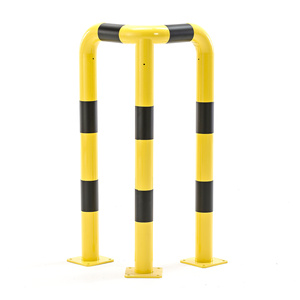
  • Modular Steel Mezzanine Attic Platforms: Urban fulfillment hubs require multi-tier space multiplication. Modern rack-supported mezzanines integrate cold-formed high-load floor decking, perforated mesh grating, and integrated anti-collision guardrails. These structures convert empty overhead air space into active order-picking, sorting, or administrative office levels without requiring costly building expansions.
  • Environmental Sustainability & Zero-VOC Coatings: Enterprise ESG guidelines now mandate supply chain accountability. Top Chinese suppliers utilize eco-friendly, zero-VOC thermosetting powder coatings applied via electrostatic spray equipment. Phosphating and washing stages recycle process water using closed-loop filtration systems, ensuring compliance with global ISO 14001 environmental directives.
  • Smart Rack Monitoring & Structural Health Sensors: High-bay pallet installations exceeding 10 to 15 meters in height are increasingly equipped with real-time wireless tilt sensors and vibration monitors. These devices detect structural strain, micro-deflections, or accidental forklift impacts, alerting site managers before structural failure occurs.

3. Critical Quality Assurance Checkpoints for Overseas Procurement

Navigating cross-border procurement for industrial racking systems requires careful evaluation of technical specifications and manufacturer credentials. Procurement teams should inspect the following key engineering benchmarks prior to issuing purchase orders:

Key Technical Inspection Checklist:

  1. Material Certification: Original Mill Test Certificates (MTC) proving steel chemical composition and yield strength (Q235B vs. Q355B).
  2. Beam Deflection Ratio: Verification that beam deflection does not exceed L/200 (Length divided by 200) under maximum rated Uniformly Distributed Load (UDL).
  3. Upright Profile Geometry: Multi-bend upright profiles (typically 9 to 13 bends) to maximize resistance to torsional buckling.
  4. Baseplate Anchorage & Shimming: Heavy-duty steel footplates anchored with chemical or mechanical expansion bolts rated for local concrete slab specs.
  5. Surface Pre-Treatment: Multi-stage chemical degreasing, rust removal, and zirc-phosphate coating prior to powder application to prevent flaking.

By partnering directly with an experienced China storage rack manufacturer, enterprises benefit from comprehensive OEM/ODM customization, custom CAD layout drawings, structural engineering calculations, and turnkey export packaging designed for seamless container loading and global transit protection.

Frequently Asked Questions

Everything You Need to Know About Procurement & Logistics

Get instant clarity on custom design options, international shipping, safety compliance, installation assistance, and factory direct guarantees.

Is your factory a direct manufacturer or a trading intermediary?
We are a direct manufacturer operating state-of-the-art production facilities in China equipped with continuous automated roll-forming machines, robotic MIG welding cells, and an automated electrostatic powder coating line. We also provide full turnkey project management, custom CAD layout engineering, and export documentation under a single direct contract.
What safety design standards do your storage racking systems comply with?
Our racking systems are custom engineered to satisfy global industry standards, including Australian AS4084-2012, European FEM 10.2.02, American RMI guidelines, and ISO 9001:2015 quality management mandates. Structural safety factors (typically 1.5 to 1.85) are rigorously applied based on your project location and seismic requirements.
Can you customize racking dimensions to fit my existing warehouse layout and forklifts?
Yes. Every order is fully customized. Our structural design team evaluates your warehouse floor plan, clear height under sprinklers/lighting, floor slab load capacity, pallet dimensions (W x D x H), gross weight, and forklift turning radius to produce optimized CAD layout drawings free of charge.
What steel grades are used in your upright columns and load beams?
We utilize premium certified cold-rolled structural steel from top tier steel mills (such as Baosteel and Shougang). Upright columns use Q355B / Q235B high-tensile steel, while load beams feature specialized box beam or step beam profiles engineered for maximum torsional rigidity and minimal deflection under heavy UDL conditions.
How are racking components packaged for ocean freight container transport?
All structural components (upright frames, beams, shelf panels) are bundled using heavy-duty steel strapping, protective plastic wrap, edge corner guards, and wooden dunnage base blocks. This ensures complete stability during container loading, ocean shipping, unloading, and forklifting at site without surface scratch damage.
Do you provide overseas installation support or engineering supervision?
Yes. We supply comprehensive installation manuals, 3D assembly diagrams, structural step-by-step videos, and component numbering systems. For large-scale projects, we can dispatch qualified installation supervisors or experienced engineering teams on-site to direct local labor and conduct final safety sign-offs.
What is the typical lead time for a custom enterprise warehouse racking order?
Standard manufacturing lead times range between 15 to 25 working days following final CAD layout approval and deposit confirmation. High-volume custom projects or specialized automated radio shuttle systems are scheduled according to phased delivery timelines agreed upon in the project proposal.
Global Project Track Record

Trusted by Global Industry Leaders & Supply Chain Logistics Networks

Our heavy-duty racking installations power distribution hubs, manufacturing plants, retail backrooms, and e-commerce fulfillment centers worldwide.

Sony EMCS
DHL Supply Chain
Adidas Logistics
Perodua Motors
CEVA Logistics
Econsave Hypermarket
Kansai Paint
Daihatsu Automotive
UMW Industrial Equipment
Rubberex Global
Garena Logistics
Motorola Solutions

Ready to Maximize Your Warehouse Storage Density?

Connect with our expert industrial engineering team today for a complimentary warehouse layout CAD design, structural load assessment, and direct factory quote within 24 hours.

Send an Inquiry
+60 11-3302 1235[email protected]