Top Trusted Wire Mesh Container Factory & Supplier
Global Heavy-Duty Material Handling Whitepaper: Structural Steel Tolerances, Modular Post Pallets, Safety Decking, and High-Density Warehouse Optimization
Precision Engineering & Logistics Hardware
High-Efficiency Warehouse Racking & Industrial Container Systems
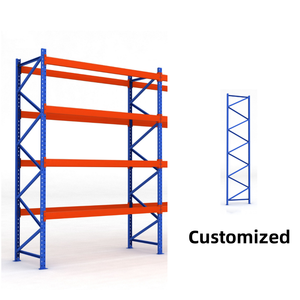
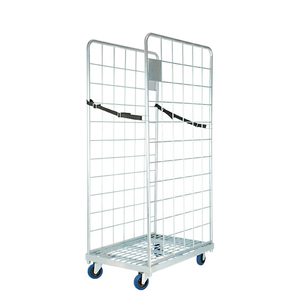
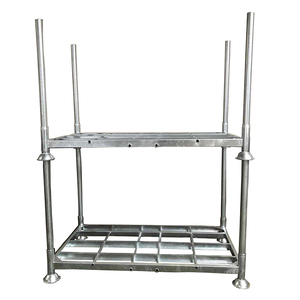
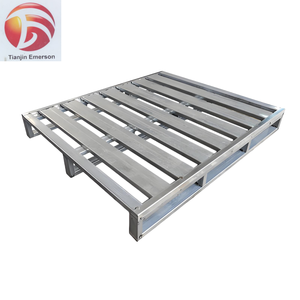
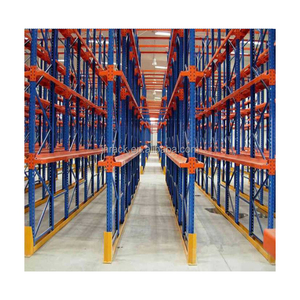
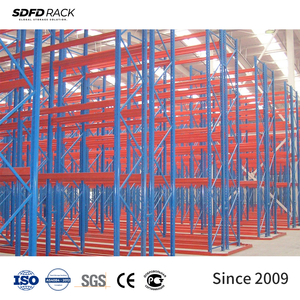
Explore our certified range of modular warehouse racking, stackable stillages, heavy-duty post pallets, roll cages, and structural impact protectors engineered to meet stringent global intralogistics specifications.
Structural Metallurgy, Weld Integrity, and Load Verification Standards
In modern industrial material handling, a wire mesh container or stillage is not merely a steel basket—it is an engineered load-bearing asset subject to dynamic multi-axial stresses during high-bay retrieval, rough transit, and multi-tier stacking.
Q235B
Certified Carbon Steel Yield
≥ 450 MPa
Wire Tensile Strength
1:4 Ratio
Collapsible Freight Economy
100% QA
Full NDT Weld Penetration
The Metallurgy of High-Tension Drawn Wire Mesh
Global supply chain failures frequently trace back to improper material selection: utilizing brittle commercial-grade iron wire with inadequate tensile strength or uncontrolled carbon content. Top-tier wire mesh containers demand low-carbon cold-drawn steel wire (conforming to GB/T 700-2006 grade Q235B or ASTM A510M 1008/1010 standards).
Cold drawing aligns the grain structure, elevating the wire yield strength from ~235 MPa to upwards of 450–550 MPa. This metallurgical transformation guarantees that when loaded to maximum capacity, individual mesh panels resist localized bulging, permanent plastic deformation, and shear fracture at the spot-welded nodes.
U-Channel Under-Grid Reinforcement: The bottom grid is structurally integrated with roll-formed steel channels (1.5mm to 3.0mm thickness) designed to transfer pallet-fork shocks safely across the base frame.
Anti-Tilt Self-Centering Cup Feet: Heavy-gauge cold-stamped corner feet lock securely onto the upper rim of lower units, ensuring positive engagement up to 4-high stacked configurations under seismic grade IV conditions.
Finite Element Analysis (FEA) Benchmarking
Every standard design undergoes 3D elastic-plastic stress modeling simulating forklift heel impacts, off-center loading, and static stacking creep. Deflection limits under uniform distributed loads (UDL) are maintained strictly within L/200 according to ANSI MH26.2 and AS 4084 guidelines.
Corrosion Protection: Zinc Electroplating vs. Hot-Dip
For standard distribution centers, cold-galvanizing with trivalent chromium (Cr3+) blue-white passivation delivers RoHS-compliant aesthetics and 72-hour neutral salt spray (ASTM B117) resistance. For cold-chain refrigerated units (-30°C) or outdoor staging, hot-dip galvanizing per ISO 1461 guarantees an 85μm minimum zinc alloy coating that eliminates rust along wire intersection crevices for 25+ years.
Series Model
Outer Dimensions (L×W×H mm)
Wire Gauge (Ø mm)
Grid Pitch (mm)
Dynamic Capacity (kg)
Stacking Limit
Surface Treatment
WMC-800-STD
800 × 600 × 640
4.8 ± 0.05
50 × 50
800 kg
1 over 3 Full Load
Trivalent Zinc Electroplate
WMC-1000-HD
1000 × 800 × 840
5.8 ± 0.05
50 × 50 / 50 × 100
1,200 kg
1 over 4 Full Load
Zinc / Epoxy Hybrid
WMC-1200-XHD
1200 × 1000 × 890
6.0 ± 0.05
50 × 100
1,500–2,000 kg
1 over 3 Full Load
Hot-Dip Galvanized ISO 1461
PPC-POST-150
1400 × 1200 × 1250
Tube Ø60 × 3.5mm
Open Post Framing
1,500 kg
1 over 3 Full Load
Electrostatic Powder Coated
RC-2SIDED-EXP
850 × 735 × 1700
Mesh Ø3.8mm Rod
100 × 150
500 kg
Demountable / Roll Base
Bright Zinc Plate Passivated
Procurement Foresight & Supply Chain Strategy
Future Procurement Trends in Industrial Wire Containers and Stillage Systems
Procurement directors and warehouse logistics planners are transitioning from transactional spot-purchasing to strategic, data-driven lifecycle acquisition. Analyze the four dominant market trajectories shaping global intralogistics capital allocation through 2030.
1. IoT-Embedded Hybrid Fleet Pooling
Traditional passive containers are rapidly evolving into intelligent tracking nodes. B2B enterprises operating closed-loop logistics now specify industrial wire containers embedded with passive RAIN RFID tags, Bluetooth Low Energy (BLE) beacons, or LPWAN location modules integrated directly inside reinforced corner housings.
Automated dwell-time analytics eliminating lost inventory across tier-1 subcontractor tiers.
Temperature, vibration, and impact logging for high-value automotive casting transit.
2. Scope 3 Carbon Audits & Circular Metallurgy
Global environmental mandates (including the EU Corporate Sustainability Due Diligence Directive and international ESG reporting) are compelling tier-1 automotive, e-commerce, and electronics manufacturers to account for the embodied carbon within their handling equipment.
Phasing out of toxic hexavalent chromium coatings in favor of bio-passivated trivalent zinc and low-VOC powder coats.
Adoption of 100% recyclable tubular steel post pallets over non-repairable wooden or chemically treated packaging.
3. AGV / AMR and High-Bay AS/RS Dimensional Tuning
As autonomous guided vehicles (AGVs) and autonomous mobile robots (AMRs) replace manual counterbalanced forklifts, mechanical dimensional tolerances for wire mesh containers are compressing from coarse historical baselines (±6mm) to aerospace-like repeatability (±1.5mm).
Laser-cut alignment notches on base skids to interface reliably with robotic roller conveyors.
Operator safety during picking is the primary ergonomic concern in modern distribution facilities. Traditional sliding latch bolts are vulnerable to bending when struck by loading equipment or accidentally dislodging under internal hydrostatic forces from bulky bulk goods.
Modern engineering incorporates multi-point self-locking gravity latches with integrated spring-loaded retaining pins. Operators can drop the front ergonomic half-gate with one hand while the latch auto-secures upon closing, fully preventing accidental gate opening during highway flatbed transport or overhead crane hoisting.
Modular Wire Mesh Decking Integration
For heavy-duty beam rack systems, industrial wire mesh decks with flanged waterfall edges provide an essential safety layer. Unlike solid plywood decks, wire mesh decks allow ceiling fire suppression sprinkler water to penetrate instantly through racking tiers (complying with NFPA 13 and OSHA fire codes) while offering 100% visual inventory inspection from floor level.
Optimizing the 1:4 Reverse Logistics Return Footprint
Freight overhead often erodes the ROI of returnable transit packaging (RTP). A standard rigid stillage occupies identical shipping volume whether empty or fully loaded, resulting in significant "empty air freight" expenditures on return logistics.
Our engineered collapsible wire containers employ precision dual-spiral helical hinges connecting the side walls to the base. Upon unloading, a single operator can collapse the four panels flat against the base in less than 30 seconds without removing hardware.
Folded Density: Four collapsed containers occupy the dimensional envelope of a single open unit, immediately slashing backhaul transport costs by 75%.
Interlocking Stack Pins: Collapsed units lock rigidly via perimeter safety lugs, enabling stable return transport stacks up to 16 units high inside 40ft High Cube sea containers.
Answers to critical engineering, testing, compliance, and logistics questions commonly evaluated by procurement officers, plant managers, and structural supply chain consultants.
Q1: How is the true dynamic load rating verified versus static stacking capacity?
Static load refers to resting capacity when stationary on a level concrete slab (e.g., 2,000 kg stacked 4-high, where the bottom container withstands 6,000 kg of superimposed force). Dynamic rating (typically 1,000–1,500 kg) measures structural integrity under forklift accelerations, braking vibrations, and uneven ramp traverses. We verify ratings via cyclical hydraulic press testing and dynamic shaker-table simulations based on ANSI MH26.2 standards.
Q2: What prevents the base mesh from sagging when loaded with small, dense steel forgings?
Base deflection is prevented through three engineering controls: wire diameter selection (Ø5.8mm to Ø6.2mm cold-drawn wire), reduced grid pitch (from standard 50×50mm down to 25×25mm or 50×25mm), and under-grid roll-formed U-channels welded every 100mm across the fork pocket spans. For concentrated micro-loads, heavy-gauge steel sheet liners or corrugated PP inserts are added to distribute point loads.
Q3: Electro-galvanized vs. Hot-Dip Galvanized vs. Powder Coating: Which finish should we specify?
For indoor warehousing with controlled humidity, blue-white trivalent zinc electroplating (Cr3+) is the most economical and aesthetically clean choice. For exterior yards, marine environments, and sub-zero cold storage facilities, specify Hot-Dip Galvanizing (ISO 1461, min 75–85μm thickness). Electrostatic powder coating is chosen for visual color-coding of SKUs, assembly line integration, or branding requirements.
Q4: Can custom wire mesh containers be manufactured to match existing non-standard pallet footprints?
Yes. In addition to ISO standard footprints (1200×1000mm, 1200×800mm Euro-pallet, and 1100×1100mm Asian standard), custom dimensions can be configured. Custom variables include custom fork-stirrup heights, full-drop or double-drop gates, internal removable dividers, forklift guide channels, crane lifting eyes, and nylon or polyurethane wheel castor mountings.
Q5: What are the standard tare weight tolerances, and how do they impact freight budgeting?
Standard heavy-duty wire containers range from 38 kg (compact 800×600mm) to 85 kg (heavy-duty 1200×1000mm with solid undercarriage). Our precision automated fabrication maintains tare weight consistency within ±1.5%, which is crucial for automated weighing systems that calculate freight cargo weights and logistics billing directly from gross scale readouts.
Q6: How do wire containers improve fire safety compliance compared to solid steel boxes or timber pallets?
Solid bins and wooden pallets act as horizontal fire barriers that trap rising heat while deflecting overhead sprinkler discharge, potentially delaying fire suppression. Wire mesh open area (>70% open grid) allows sprinkler water to cascade directly to lower rack levels while enabling vertical smoke ventilation, keeping facilities compliant with NFPA 13, FM Global, and EN 12845 life-safety regulations.
Q7: What safety factors are applied to the design of stacking feet during multi-tier storage?
All stacking feet are deep-drawn from 3.0mm structural hot-rolled sheet steel featuring flared self-centering flanges. The engineering safety factor is 2.5:1 against catastrophic buckling under maximum permissible static load. Even if the container is approached by a forklift at a slight tilt angle, the flared profile guides the unit squarely into positive mechanical lock.
Q8: What is the standard manufacturing lead time and minimum order quantity (MOQ) for overseas export?
Standard models maintain raw material stock with typical production turnaround of 15–20 business days for full container loads (FCL: approx. 280–320 disassembled units per 40ft HQ). Tailored engineering prototypes require 7–10 days for 3D CAD sign-off and physical fabrication. Standard minimum order quantity for custom production runs starts at 50 units.
Manufacturing Excellence & Corporate Credibility
Why Tier-1 Global Supply Chains Choose Our Production Ecosystem
Operating as a registered manufacturer and comprehensive intralogistics provider, we combine vertically integrated production with rigorous international quality systems to deliver zero-defect storage assets.
Dual Manufacturing Capability
Direct in-house automated roll-forming and robotic welding complemented by verified partner ecosystems to fulfill complex enterprise contracts under one unified warranty.
ISO 9001 & 14001 Aligned
Stringent factory production audits, continuous metallurgical testing, non-destructive weld inspections, and eco-friendly waste management processes for Scope 3 alignment.
Cross-Border Project Delivery
Extensive track record deploying structural racking systems, custom wire containers, and automated shuttle platforms across Malaysia, Singapore, and global multi-site accounts.
Interservice Lifecycle Auditing
Full support lifecycle including professional installation supervision, annual deflection inspections, preventative maintenance, and on-site load rating certification.
Consult with Our Technical Engineering Team Today
Send your warehouse floor plans, product dimensions, forklift parameters, and payload targets. Our senior structural engineers will draft custom 3D layouts, structural calculations, and quotation proposals within 24 business hours.