Explore our structural steel warehousing systems designed for high-load durability and seamless logistics integration.
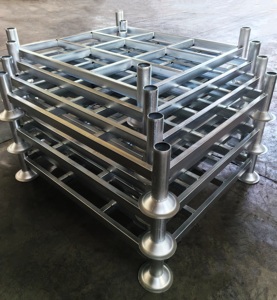
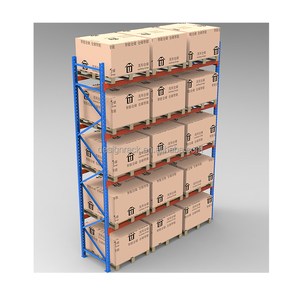
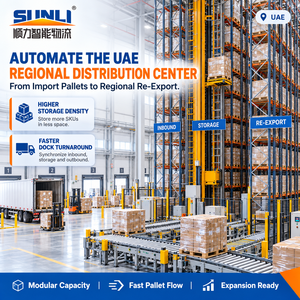
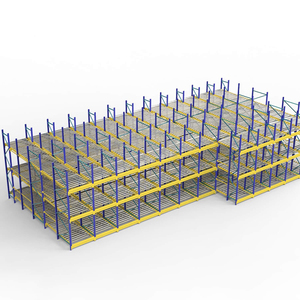
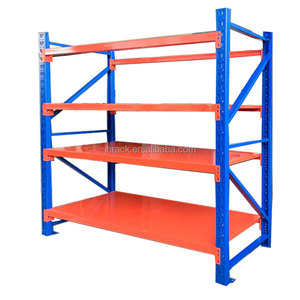
Modern warehouse logistics in industrial metropolises such as Osaka require an uncompromising approach to volumetric efficiency, structural safety, and automated throughput. As a global original equipment manufacturer (OEM) specializing in high-density storage platforms, our CE Certified Radio Shuttle Racking System represents the pinnacle of semi-automated pallet storage technology. Designed in full compliance with European standard EN 15512 (Steel static storage systems) and European Machinery Directive 2006/42/EC, this system replaces traditional forklift aisles with precision-engineered shuttle tracks embedded directly within deep storage channels.
The system operates via a self-powered electric radio shuttle car controlled wirelessly by long-range RF or Wi-Fi industrial handheld units. The shuttle navigates cold-formed steel rails integrated within specialized heavy-duty racking channels. By decoupling forklift positioning from deep channel storage, operators eliminate the risk of vehicle impact damage to structural uprights—a primary cause of failure in traditional drive-in racking installations.
To ensure flawless performance under severe industrial workloads, every components package exported to Osaka and the greater Kansai region undergoes rigorous stress testing, metallurgical validation, and electrical compliance checks:
| System Attribute | Radio Shuttle Racking Specification | Compliance & Testing Standard |
|---|---|---|
| Certification & Safety | CE Mark, Machinery Directive 2006/42/EC, Low Voltage Directive 2014/35/EU | EN 15512, FEM 10.2.02, ISO 9001:2015 |
| Rated Load Capacity | 500 kg to 1,500 kg per pallet position (Customizable to 2,000 kg) | Static & Dynamic Load Validated |
| Operating Modes | First-In, First-Out (FIFO) & Last-In, First-Out (LIFO) | Configurable via RF Controller / WMS Interface |
| Sub-Zero Cold Chain Rating | Operates down to -25°C (Special Arctic Lithium Battery & Synthetic Lubricants) | IP65 Dust & Moisture Sealed Electronics |
| Seismic Engineering | Custom baseplate anchor bolts & frame bracing for high peak ground acceleration | JIS Structural Code & Zone 4 Seismic Standards |
Osaka serves as the economic nerve center of western Japan (Kansai region), boasting major maritime logistics nodes such as the Port of Osaka (Nanko District), Sakishima Island, and Maishima Logistics Park, alongside strategic inland hubs in Ibaraki, Takatsuki, Sakai, and Izumiotsu. However, logistics operators and cold-storage facilities throughout Osaka Prefecture face acute structural headwind pressures:
Industrial land leasing rates in Osaka Bay (Wangan zone) remain among the highest in East Asia. High cost per tsubo (3.3 sq. meters) forces warehouse managers to maximize vertical clearance and eliminate dead aisle space.
Strict caps on truck driver overtime hours demand faster loading and unloading cycles at Osaka distribution centers. Pallet retrieval speeds must be optimized to prevent loading dock bottlenecking.
Osaka's thriving food processing industry (centered around Osaka Central Wholesale Market) and pharmaceutical logistics demand dense, energy-efficient sub-zero cold storage facilities.
Our CE Certified Radio Shuttle Racking System addresses these regional challenges through tailor-made localized configurations:
Osaka lies within a active seismic zone subject to Nankai Trough earthquake preparedness guidelines. Standard imported racking systems engineered solely for static environments pose severe risks of frame buckling, beam detachment, or pallet shedding during high-intensity ground acceleration events.
As a specialized factory supplier, our engineering team custom-designs racking structures intended for Osaka with advanced seismic dampening features:
Utilizing high-tensile chemical anchor bolts embedded into heavy concrete slabs (200mm+ depth), ensuring baseplate resistance against uplift forces during seismic lateral waves.
Shuttle tracks feature raised safety flanges and secondary locking lips that prevent the radio shuttle vehicle from jumping off tracks during sudden vertical seismic displacement.
Heavy-duty horizontal and diagonal side braces engineered according to Finite Element Analysis (FEA) to absorb lateral shear stress without permanent deformation.
Partnering with us grants Osaka businesses direct access to a premier manufacturing enterprise (SSM 202201004215 / 1449912-V) backed by robust ISO-aligned quality systems and extensive global project delivery experience.
Our key operational advantages include:
Technical guidance and commercial logistics insights for facility managers, warehouse developers, and purchasing leads in Japan.
Yes. Our radio shuttle systems are fully CE certified under the Machinery Directive 2006/42/EC and EN 15512 static steel storage standards. For Osaka and Japanese projects, we engineer our steel structures to align with JIS (Japanese Industrial Standards) material equivalents (SS400/SM490) and local building code seismic guidelines.
We handle export packaging using export-grade steel bundling, protective plastic wrapping, and shock-resistant wooden crating for shuttle vehicles. Shipments arrive via direct sea freight to the Port of Osaka (Nanko container terminal). We provide complete shipping documentation including Certificate of Origin, CE Compliance Declaration, detailed packing lists, and structural assembly manuals.
Absolutely. We produce specialized Arctic-Class Radio Shuttles engineered specifically for cold-chain facilities operating down to -25°C. These models feature sealed IP65 electronic enclosures, low-temperature synthetic lubricants, condensation heating elements, and cold-hardened LiFePO4 battery modules.
Typical manufacturing lead time for standard shuttle racking systems ranges between 20 to 30 days depending on total pallet volume. Sea transit from our production plant to Osaka Port takes approximately 7 to 12 days. Complete project execution from CAD approval to on-site delivery is usually achieved within 6 to 8 weeks.
Our battery charging stations are configured for universal industrial inputs (AC 100V–240V, Single Phase, 50/60Hz) matching Japan's electrical grid standard. Quick-swap battery trays allow 24/7 continuous warehouse operations with spare battery sets charging while shuttles are in active service.
Yes. We provide complete 3D installation blueprints, step-by-step video tutorials, and live remote engineering supervision. Additionally, our 18000 Series Interservice program provides routine structural maintenance guidelines, fast replacement part dispatching, and firmware support.
Connect with our senior logistics structural engineers to receive a free warehouse CAD layout, ROI analysis, and competitive factory-direct quote for your facility.
Get a Quote