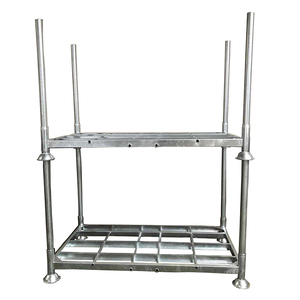
High-throughput sorting lines, vertical gravity feeds, and robust pallet storage systems designed to maximize cubic storage volume and eliminate material transfer bottlenecks across Malaysian logistics ecosystems.
The rapid maturation of Southeast Asia's logistics corridors—anchored decisively by the National Transport Policy and the relentless expansion of industrial parks across the Klang Valley, Johor Bahru (Iskandar Puteri), and Penang (Bayan Lepas and Batu Kawan)—has elevated material handling from routine manual transport into an algorithmic science. Modern logistics distribution centres, semiconductor assembly cleanrooms, palm oil derivatives packing plants, and FMCG manufacturing centers require uninterrupted, high-velocity movement. Belt conveyor systems serve as the mechanical spine connecting automated high-bay racking, mezzanine picking floors, and robotic sorting nodes.
Chinese belt conveyor equipment manufacturers have achieved unrivaled design sophistication, leveraging high-tensile vulcanized belting materials, self-lubricating heavy-duty idler rollers, and modular smart control architectures. When engineered directly in top-tier Chinese manufacturing complexes and integrated locally by proven engineering teams such as My Interack Sdn. Bhd., Malaysian operations secure a formidable operational advantage. This structural alignment balances direct factory-gate capital savings with meticulous on-site structural anchoring, local statutory safety compliance (DOSH / JKKP regulations), and precision layout commissioning.
Strategic Takeaway: Belt conveyor sourcing for tropical climates requires balancing motor power factors, heat dissipation in non-air-conditioned high-bay facilities, humidity-resistant belt carcass construction (EP/NN polyester-polyamide synthetic plies), and synchronized PLC interfaces with vertical storage platforms.
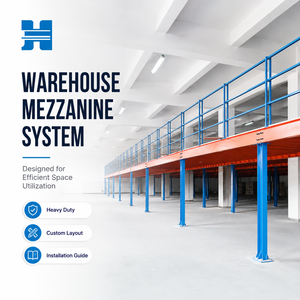
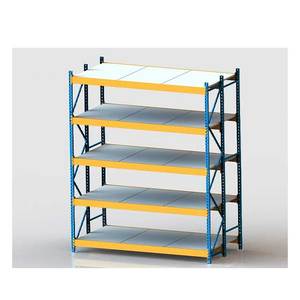
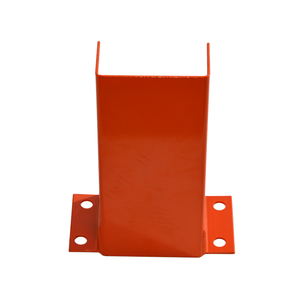
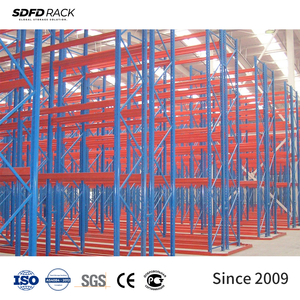
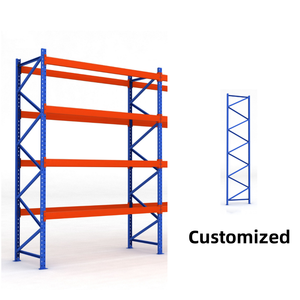
Selecting the best conveyor configuration is intrinsically linked with warehouse density planning. A continuous belt system cannot exist in isolation; it must integrate seamlessly with upstream buffer zones—such as heavy-duty selective beam racking, very narrow aisle (VNA) systems, and multi-tier H-beam structural mezzanines—while delivering parcels to cross-docking bays or secondary palletizer converters. By orchestrating structural fabrication with dynamic belt transmission lines, plant managers minimize pallet drop-offs, eliminate manual handling strain, and protect system investments through custom heavy-duty column guards and impact-absorbing safety posts.
From Penang’s electrostatic electronics manufacturing environments to Port Klang’s high-throughput cross-docking terminals, discover how China’s leading belt conveyor systems operate in Malaysia's key economic sectors.
Deployed extensively across major logistics parks in Shah Alam, Bukit Jelutong, and Sepang. High-speed slider-bed belt conveyors handle parcel induction, dynamic dimensioning, scanning, and rapid cross-belt sorting, interacting smoothly with longspan mezzanines and radio shuttle buffers.
Tailored for food processing plants and cold storage distribution across Johor and Selangor. Stainless steel (SUS304/SUS316) sanitary belt conveyors feature anti-microbial PU/PVC surfaces engineered to withstand strict Halal hygiene steam-cleaning cycles and sub-zero blast freezer feeds.
Serving Northern Corridor manufacturing centers in Penang and Kulim Hi-Tech Park. Anti-static ESD-grade synthetic belts ensure zero electrostatic discharge hazards during sensitive PCB transit, robotic component pick-and-place, and automated visual optical inspection (AOI) lines.
Built for the harsh bulk material demands of Sabah, Sarawak, and Kuantan refinery facilities. Heavy-duty rubber chevron and troughed belt conveyors resist corrosive fatty acids, abrasive palm kernel expeller loads, and high ambient tropical humidity without belt sagging or slippage.
Installed at industrial plants in Rawang, Shah Alam, and Tanjung Malim. Wire-mesh and steel-slat composite belt conveyors manage greasy automotive pressed parts, high-temperature weldment lines, and heavy-duty chassis subassemblies routed toward vertical storage stillages.
Operational around Port Klang Free Zone (PKFZ) and KLIA Cargo Village. High-inclination corrugated sidewall belt conveyors and telescopic truck-unloading conveyors accelerate container turnaround times, linking quay container discharge with sorting bays.
A comparative engineering evaluation designed for plant directors, procurement managers, and M&E consultants evaluating throughput, spatial footprint, lifecycle costs, and floor integration.
| Conveyor / Handling System | Primary Load Profile | Throughput Velocity (m/min) | Maximum Incline Angle | Energy Efficiency (kW/Ton-hr) | Warehouse Density Synergy |
|---|---|---|---|---|---|
| Flat Slider-Bed Belt Conveyors | Unit parcels, cartons, tote bins, irregular envelopes | 10 – 120 m/min | 0° – 18° | High (IE3/IE4 Motors with VFD control) | Links mezzanines & selective racking buffers |
| Troughed Belt Bulk Conveyors | Aggregates, fertilizer, biomass, palm kernel bulk | 30 – 180 m/min | Up to 22° (30°+ with chevrons) | Optimal across long linear transfer spans | Outdoor silo feeding & raw material stillages |
| Motorized Driven Roller (MDR) Lines | Rigid flat-bottom cartons and industrial totes | 15 – 60 m/min | 0° – 10° | Medium-High (Run-on-demand zero pressure) | Compatible with pick-to-light longspan rows |
| Modular Plastic Belt Conveyors | Food crates, beverage bottles, abrasive wet packages | 5 – 50 m/min | Up to 35° (with integrated flights) | Moderate (Higher mechanical drag factor) | Integrates with sanitary pallet storage floors |
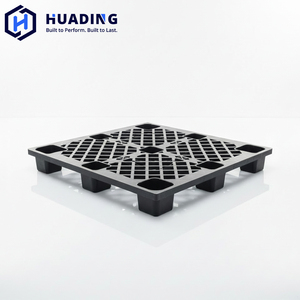
| Chain / Slat Heavy-Duty Conveyors | Loaded wooden/plastic pallets, steel stillages (1.5T+) | 5 – 25 m/min | Horizontal only (0° – 5°) | Moderate (Requires higher gear reduction torque) | Direct feed for Radio Shuttle & VNA High Bays |
How environmental factors, regional supply chain reconfiguration, and Industrial Revolution 4.0 (Industry4WRD) policies are reshaping procurement priorities for local factory operators.
Malaysia’s constant 80%+ relative humidity and coastal saline atmosphere require elevated surface protection. Chinese OEMs now engineer conveyor stringers using hot-dip galvanization (ISO 1461) and electrostatic epoxy-polyester powder coats rated for C3/C4 corrosive atmospheric environments, preventing premature chassis oxidation.
With revised Malaysian commercial electricity tariffs and industrial green carbon compliance, operators demand IE3 and IE4 ultra-efficient motors paired with smart frequency inverters. Conveyors adjust belt speeds automatically based on photoelectric sensor inputs, cutting power draw by up to 35% during lull hours.
Rising land acquisition costs across the Subang, Klang, and Senai industrial zones force companies to build vertical storage. The modern trend combines horizontal high-velocity belt transfer lines with 4000 Series Drive-In and 11000 Series Radio Shuttle racking systems, creating unified, semi-automated logistics nodes.
Practical commercial, technical, and regulatory answers addressing cross-border shipping, tariff exemptions, local certification, and preventative maintenance agreements.
Under the ASEAN-China Free Trade Agreement (ACFTA), machinery accompanied by a valid Form E Certificate of Origin generally qualifies for 0% preferential import duty entering Port Klang or Tanjung Pelepas. Importers must account for Malaysia’s prevailing Sales and Service Tax (SST), typically 10%, which can often be credited or exempted for designated export-oriented companies holding MIDA or LMW (Licensed Manufacturing Warehouse) status.
All conveyor machinery must satisfy the stringent guidelines set forth by the Department of Occupational Safety and Health (DOSH / JKKP) under the Factories and Machinery Act (FMA) 1967 and the Occupational Safety and Health (Amendment) Act 2022. Requirements mandate emergency pull-cord switches along every exposed run, full nip-point finger guards around drive drums, and thermal overload electrical protection.
Standard custom belt conveyor manufacturing ranges from 20 to 35 days depending on motorized roller complexity and steel framing tonnages. Ocean transit from major Chinese shipping ports (Ningbo, Shanghai, Shenzhen) to Port Klang takes approximately 5 to 9 days. Including customs clearance and local mechanical erection by dedicated crews, systems are fully operational within 6 to 9 weeks.
We configure systems with vulcanized ceramic or diamond-grooved rubber drive pulley lagging, providing exceptional traction coefficients even under damp ambient conditions. Furthermore, our synthetic belts feature micro-sealed sealed edges and antibacterial top layers to resist microbial mold buildup common in tropical warehouse environments.
Yes. By coupling Chinese factory-direct pricing with local engineering presence through My Interack Sdn. Bhd., clients receive factory-trained local installation teams. Our technicians handle concrete floor slab drilling, chemical anchoring, laser roller leveling, sensor calibration, and periodic preventative inspection services with immediate spare parts availability.
Absolutely. Our control enclosures are supplied with global PLC architectures (Siemens, Mitsubishi, or Schneider) equipped with industrial Ethernet (Profinet, Modbus TCP, EtherNet/IP) capabilities. They interface natively with upstream barcode barcode scanners, automated weigh-scales, warehouse management software (WMS), and automated guided vehicles (AGVs).
Based in Shah Alam, Selangor, My Interack Sdn. Bhd. (SSM 202201004215 / 1449912-V) unites precision Chinese conveyor manufacturing capabilities with over two decades of localized intra-logistics installation experience.
We operate our own state-of-the-art production facilities combined with vetted long-term manufacturing agreements with China’s most advanced conveyor and racking equipment fabricators under a single unified engineering contract.
Every structural column, idler spindle, and belt carcass complies with ISO 9001 quality management and ISO 14001 environmental benchmarks. Load ratings are tested under rigorous cyclical stress regimens before dispatch.
Our experienced M&E engineering team inspects your exact site dimensions, clear ceiling heights under roof trusses or fire sprinklers, floor slab concrete PSI ratings, and forklift turning radiuses to build optimized 2D/3D CAD layouts.
We do not sub-contract core mechanical assembly. Our own certified field engineers assemble, align, bolt, laser-level, and dynamically anchor every conveyor rail, column guard, and upright structure using calibrated tools.
Our dedicated post-commissioning maintenance program covers periodic structural inspection, thermal bearing audits, motor torque checks, and immediate replacement of worn components to guarantee total workplace safety.
From prestigious multi-tier distribution centers like Sony EMCS in Malaysia to high-density regional logistics sites across Singapore, our portfolio proves reliable execution across diverse ASEAN customs and project environments.