Discover our high-precision racking systems and automation barriers customized for Korean warehouse standards, logistics hubs, and manufacturing facilities.
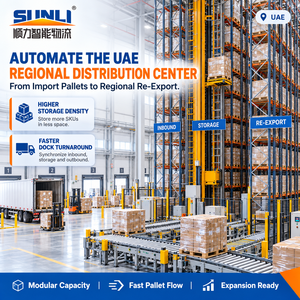
South Korea’s rapid transformation into a global powerhouse for high-tech manufacturing, pharmaceuticals, K-Beauty, and fast-paced e-commerce (driven by platforms like Coupang, Naver Shopping, and CJ Logistics) has exerted unprecedented pressure on industrial warehouse footprints. With industrial land prices in major hubs such as Gyeonggi-do, Incheon Free Economic Zone (IFEZ), and Busan Port Hinterland skyrocketing, traditional selective racking systems are no longer economically viable for high-density storage needs.
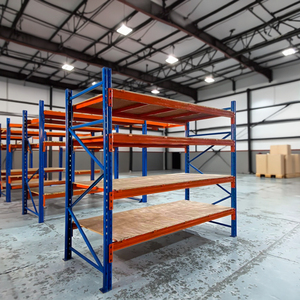
As China’s premier manufacturer and exporter of heavy-duty pallet flow racks, our engineering division has designed specialized Gravity Flow Racking Systems specifically adapted to South Korean industrial environments. Pallet flow racking utilizes inclined roller tracks set at a precise gradient (typically 3% to 4%) allowing palletized goods to glide seamlessly from the loading (rear) aisle to the picking (front) aisle under controlled gravitational acceleration. This architecture guarantees strict First-In, First-Out (FIFO) stock rotation while eliminating up to 60% of unnecessary forklift aisles compared to conventional selective pallet racks.
The operational excellence of a heavy-duty gravity pallet flow system rests entirely on its dynamic braking mechanisms and track engineering. In high-density Korean cold chain facilities where ambient temperatures drop down to -30°C, ordinary rollers suffer from lubricant freezing and kinetic jams. Our custom-engineered pallet flow lanes incorporate high-spec components tailored for extreme operational reliability:
Key economic, structural, and regulatory shifts driving the mass adoption of high-density gravity flow racks across South Korea's supply chain network.
Warehouse rental rates in Seoul Capital Area (SCA) have surged. Developers are building multi-story logistics centers requiring maximum cubic storage utilization per square meter of footprint.
Strict fresh food delivery standards (Early Morning Delivery) and biopharmaceutical temperature compliance require FIFO rotation in refrigerated (-20°C) and deep-freeze (-30°C) settings.
The Korean Occupational Safety and Health Agency (KOSHA) enforces rigid guidelines on heavy equipment movement. Gravity racks separate forklifts from picking staff, reducing workplace risks.
Pallet flow lanes serve as dynamic buffering bays for Autonomous Mobile Robots (AMRs), Automated Guided Vehicles (AGVs), and AS/RS automated stacker cranes in modern Korean smart factories.
Following seismic activity shifts in the Korean peninsula (e.g., Pohang & Gyeongju tremors), structural design regulations require verified seismic bracing and high-tensile anchor engineering.
Under the Regional Comprehensive Economic Partnership (RCEP) and China-Korea FTA, importing Chinese rack structural steel offers substantial cost savings over domestic Korean fabricators.
In the mega-fulfillment hubs surrounding the Greater Seoul Area, speed of order dispatch is paramount. Our pallet flow rack systems are installed as live dispatch staging lanes. Fast-moving SKUs are loaded from high-density replenishment racks directly into flow channels facing packing zones. Workers pick items instantly from the front position without interfering with fork trucks operating in the rear replenishment corridors.
Serving Tier-1 and Tier-2 suppliers to Hyundai Motor Group and KG Mobility, our heavy-duty pallet flow racks handle metallic standard containers (similar to Stillages or mesh cages). Engineered with reinforced heavy steel roller tracks, these lanes deliver engine blocks, transmission assemblies, and body stampings directly to robotic assembly lines on a strict Just-In-Time (JIT) sequence.
In cold storage facilities storing perishable seafood, meat imports, and processed K-food items, operational energy costs are astronomical. Pallet flow systems increase cold storage density by up to 80% compared to selective racks. By reducing total refrigerated room volume and eliminating wasted aisle heating losses, Korean cold chain operators achieve rapid ROI and total FIFO compliance required by the Ministry of Food and Drug Safety (MFDS).
Evaluate how Pallet Flow Racks compare against other high-density racking configurations for South Korean logistics environments.
| Racking Type | Storage Density | Inventory Access (FIFO / LIFO) | Forklift Aisle Requirement | Korean Cold Storage Suitability | Selectivity |
|---|---|---|---|---|---|
| Pallet Flow Rack | Very High (85%+) | Strict FIFO (First-In First-Out) | Only 2 Aisles (Load & Pick) | Excellent (-30°C Capable) | High per Lane |
| Selective Pallet Rack | Low (40-50%) | FIFO / LIFO Flexible | Multiple Aisles Required | Poor (Wastes Cubic Space) | 100% Instant |
| Drive-In Racking | High (75-80%) | Strict LIFO (Last-In First-Out) | 1 Aisle Entrance | Moderate (Risk of Collisions) | Low |
| Radio Shuttle System | Maximum (90%) | FIFO or LIFO Programmable | 1 or 2 Aisles | High (Requires Lithium Battery Maint.) | Moderate per Channel |
As a leading Chinese industrial rack manufacturer holding ISO 9001, ISO 14001, and European CE structural safety certifications, we offer South Korean industrial buyers an unmatchable combination of manufacturing scale, precision customization, and cross-border logistical ease.
We source direct structural steel coils from premier mills (Baosteel, Shougang Group). Our upright profiles undergo precision 18-stage cold roll forming for maximum tensile rigidity under dynamic impact.
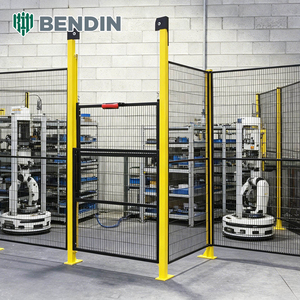
Every beam connector, roller frame bracket, and safety fence barrier is welded with ABB robotic arms, followed by an automated Swiss Gema electrostatic powder-coating line for scratch and corrosion resistance.
Located near major Chinese deep-water ports (Qingdao, Ningbo, Shanghai), our shipping lead times to Busan, Incheon, or Pyeongtaek ports average just 3 to 5 days, enabling lightning-fast project completion schedules.
Addressing key technical, customs, installation, and safety questions commonly asked by South Korean procurement teams and logistics managers.
Partner with China’s premier pallet flow racking manufacturer. Contact our engineering department today for free CAD layout designs, structural calculations, and factory-direct export quotes.
Contact Us