Precision-fabricated gravity rollers, selective pallet configurations, and specialized warehouse protective infrastructure deployed globally.
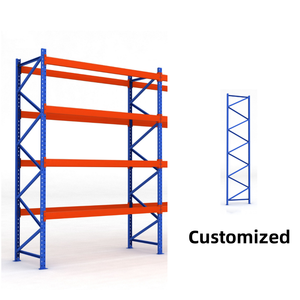
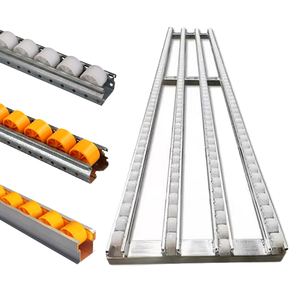
Decoupling operational load cycles, minimizing carbon footprint, and multiplying throughput through gravity-fed kinematics.
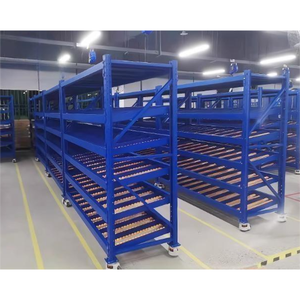
In high-throughput distribution environments across the Gulf Cooperation Council (GCC), optimizing structural density while maintaining strict stock turnover protocols presents an ongoing challenge for supply chain engineers. Gravity flow racking systems—also classified under dynamic roller rack technology—represent an optimal mechanical solution. Operating on an inclined plane equipped with high-durability cylindrical rollers or skate wheels, these systems utilize natural gravitational acceleration to transport palletized freight and carton cases from the rear loading face to the front extraction face.
This dynamic separation between material replenishment and material retrieval aisles completely eliminates forklift cross-traffic interference. In a traditional selective pallet racking system, up to 60% of total footprint is consumed by operating aisles. By converting deep cubic storage volume into self-replenishing flow lanes spanning anywhere from 2 to over 20 pallet positions deep, gravity flow infrastructure achieves up to an 85% reduction in forklift travel distances and a complete enforcement of First-In, First-Out (FIFO) inventory integrity.
Specially calibrated mechanical brake rollers maintain safe descent speeds (under 0.3 m/s) independent of pallet tonnage, preventing structural collisions on 1,500kg unit loads.
Pneumatic and mechanical escapement devices isolate the front picking pallet from back pressure exerted by trailing inventory, ensuring effortless extraction by reach trucks.
Manufactured strictly utilizing Q235B and Q355B structural steel certified to withstand dynamic point loading and persistent seismic acceleration profiles.
Precision-engineered installations matching the strategic goals of the National Industrial Development and Logistics Program (NIDLP).
The Kingdom of Saudi Arabia is experiencing rapid logistics transformation powered by Vision 2030. As international logistics operators converge around master developments in Riyadh Logistics Park, King Abdullah Port (KAEC) in Rabigh, and the industrial complexes of MODON across Jeddah and Dammam, operational efficiency dictates a shift from static pallet racking to high-velocity live storage systems.
| Sector / Hub | Geographic Focus | Operational Requirement | Dynamic Flow Advantage |
|---|---|---|---|
| Cold Chain FMCG & Dairy | Riyadh & Al Kharj Industrial Zone | Sub-zero temperature maintenance (-25°C), strict SFDA batch expiration compliance. | Maximizes cubic chilled volume, reducing cooling losses by up to 35% compared to wide-aisle storage. |
| Pharmaceutical Hubs | Sudair Industrial City & Jeddah | Strict track-and-trace requirements, batch rotation under SFDA pharmaceutical standards. | Absolute FIFO enforcement guarantees zero dead inventory and eliminates manual date-checking overhead. |
| E-Commerce Fulfillment | Riyadh Integrated Logistics Zone (SILZ) | High-velocity split-case order picking with thousands of fast-moving SKUs. | Carton flow lanes integrated with pick-to-light systems triple manual pick face productivity. |
| Automotive Parts & Assemblies | King Abdullah Economic City (KAEC) | Dense storage of medium-to-heavy spare parts supplying assembly lines and dealerships. | Modular roller tracks handle varied tote dimensions with rapid replenishment from the rear aisle. |
Operating dynamic material handling equipment inside the Arabian Peninsula requires specialized engineering considerations. Unprotected standard racking installations frequently encounter early bearing degradation, dynamic wheel cracking, or surface finish oxidation due to ambient sand ingestion and elevated humidity levels encountered along the Red Sea and Arabian Gulf coasts. Our specialized export lines incorporate labyrinth-sealed precision ball bearings, electrostatically applied epoxy powder coat primers rated beyond 500 salt spray hours, and specialized ultra-high molecular weight (UHMW-PE) rollers engineered to perform seamlessly in thermal environments exceeding 50°C.
Analyzing key structural shifts dictating warehouse capital expenditures in the GCC over the next decade.
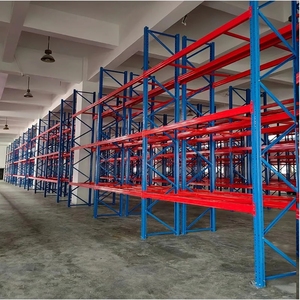
1. Escalating Urban Industrial Land Valuations: With logistics corridors surrounding Riyadh (e.g., Al Sulay, Al Mashael, and Airport logistics zones) reaching premium lease valuations, regional supply chain directors can no longer justify low-density floor stacking or single-selective setups. Converting standard facilities to high-bay gravity flow racking multiplies storage density without expanding the physical site footprint.
2. Decarbonization and Passive Mechanical Solutions: While automated storage and retrieval systems (ASRS) and radio shuttle carts present high density, they demand continuous electrical power, specialized programming maintenance, and substantial upfront capital. Dynamic gravity flow delivers identical high-bay cubic utilization relying entirely on potential energy and gravity. This passive mechanical design directly supports sustainability directives promoted within the Saudi Green Initiative.
3. SFDA Compliance and Zero-Waste Quality Mandates: For entities governed by the Saudi Food and Drug Authority (SFDA), expiration-date control is non-negotiable. Standard storage configurations frequently lead to accidental "trapped" pallets during peak operations. Gravity flow guarantees that the oldest inventory is invariably positioned at the discharge pick face, completely mitigating unsaleable inventory write-offs.
Serving project engineers, logistics planners, and EPC contractors worldwide.
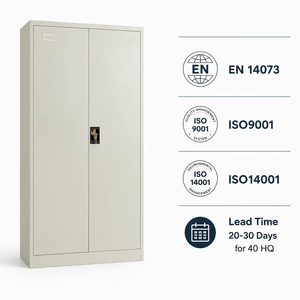
Operated under accredited ISO 9001 and ISO 14001 certifications. Advanced CNC automated cold-roll forming lines ensure precision punch profiles, dimensional consistency, and weld integrity.
In-house structural engineering teams evaluate floor slabs, seismic zone parameters, clear warehouse eaves height, and forklift models to build compliant static calculations.
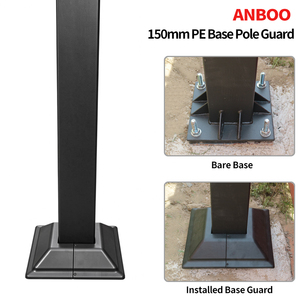
All beams, upright frames, and roller beds are bundled with protective edge guards, moisture-resistant shrink wrapping, and containerized bracing designed for long ocean transits to Jeddah Islamic Port and Dammam King Abdulaziz Port.
We provide full structural layout drawings, bolt torquing certifications, and video or dispatched on-site engineering supervision to ensure error-free assembly and load commissioning.
Every batch of brake rollers, speed controllers, and mechanical end-stops undergo cycling fatigue stress tests under continuous rated capacity prior to export sign-off.
By bypassing third-party trading intermediaries, buyers access scalable factory pricing, transparent raw steel index tracking, and clear warranty backing.
Addressing engineering specifications, port customs clearance, SASO standards, and field maintenance.
Yes. All shipments destined for the Kingdom of Saudi Arabia are supported with the necessary Mill Test Certificates (MTC), third-party loading verification, and material conformity documentation required to register and issue the SASO Certificate of Conformity through the SABER electronic portal, facilitating swift customs clearance at port of entry.
Standard industrial plastics often deform when exposed to extreme Middle Eastern warehouse heat, which can exceed 45°C without HVAC. We utilize specialized high-impact polymer blends and galvanized steel rollers paired with low-viscosity synthetic grease designed to maintain friction profiles from -30°C in cold stores up to +60°C in ambient facilities.
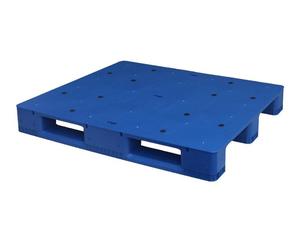
Our roller beds are engineered to handle standard wooden GMA pallets, standard Euro pallets (1200x800mm), and industrial full-perimeter or 9-leg plastic pallets (1200x1000mm). For non-standard pallets or weak bottom boards, we calibrate three-track roller configurations or full-width steel roller tracks to ensure smooth, unhindered transit.
Production turnaround typically spans 20 to 35 business days depending on tonnage and custom roller track requirements. Maritime transit to Jeddah Islamic Port or King Abdulaziz Port in Dammam generally requires an additional 18 to 28 days, allowing projects to be planned with dependable milestones.
Yes. Structural frames are modeled using finite element analysis (FEA) compliant with FEM 10.2.02 and EN 15512 international standards. For western regions of Saudi Arabia, such as the Red Sea corridor where seismic design codes are applied, upright gauges, footplate sizing, and anchor bolt specifications are custom engineered accordingly.
Because the system relies entirely on mechanical forces without electric motors, maintenance overhead is minimal. Routine quarterly inspections focus on clearing debris from tracks, checking roller free-spin, ensuring separator escapement functionality, and verifying base anchor tightness. Replacement components are standardized for rapid swap-out.