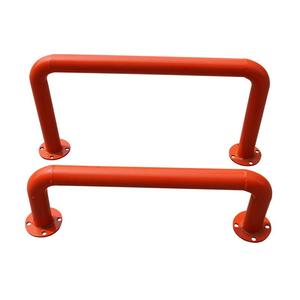
Narrow Aisle Protection
Safety Column Protection Crowd Control Narrow Column Protector Round Rack Barriers
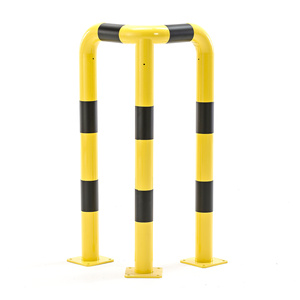
Modular cylindrical layout · Anti-crush high visibility safety barrier
Explore our heavy-duty cold-rolled steel and flexible high-molecular polymer upright armor. Engineered to isolate structural frames from forklift kinetic transfers.
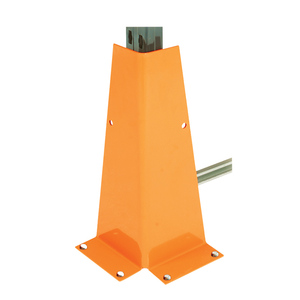
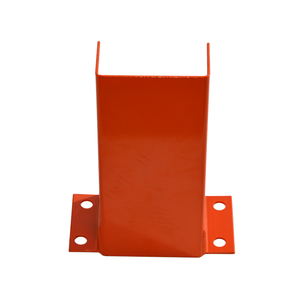
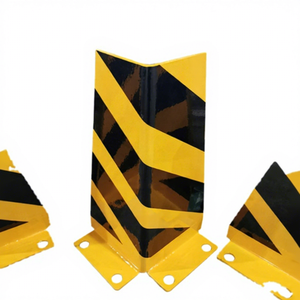
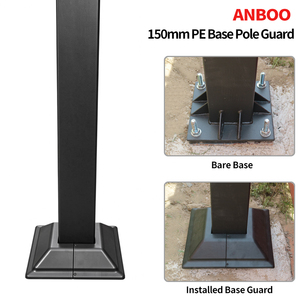
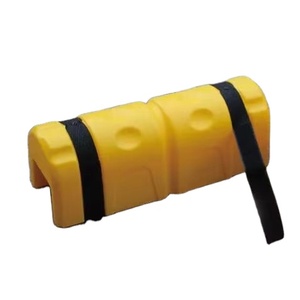
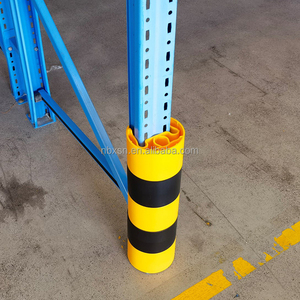
A rigorous examination of kinetic transfers, cold-form steel resilience, and risk mitigation methodologies across modern distribution facilities.
In high-throughput distribution centers and manufacturing plants, the vulnerability of cold-formed racking uprights is a primary operational risk. Storage racking systems, such as selective pallet racks, drive-in systems, and automated radio shuttle configurations, are designed to support substantial vertical gravity loads. However, they exhibit minimal resistance to lateral, out-of-plane dynamic impacts caused by material handling equipment (MHE). Even minor denting or crimping along the lower 300mm to 1000mm of an upright profile can significantly diminish axial load-bearing capacity, leading to sudden localized buckling or catastrophic progressive structural collapse.
A loaded forklift operating inside warehouse aisles generates massive kinetic forces. The dynamic equation \(E_k = \frac{1}{2} m v^2\) demonstrates that even slight velocity increments substantially escalate impact energy. When impact occurs at the bottom anchor junction of a pallet rack upright, this energy causes instant twisting, local web buckling, and anchor shear stress. Our engineered OEM/ODM rack column protection systems function as sacrificial energy-dissipation barriers or elastic kinetic absorption shields, ensuring the structural steel frame remains within elastic design tolerances.
Fabricated from heavy-gauge Q235B or cold-formed carbon steel, anchored directly into the C25/30 concrete slab with zero direct physical contact to the racking upright, isolating dynamic forces from the frame.
Formulated from ultra-high-density polyethylene (HDPE) and elastic technical polymers featuring molecular memory. Snaps directly onto upright columns, rebounding after impact without damaging equipment.
Engineered to withstand harsh temperature differentials from ambient ambient warehouses down to -30°C industrial blast freezers without plastic embrittlement or protective coating delamination.
Specifying the optimal rack protection architecture requires balancing floor space constraints, turning radii, aisle geometries, and equipment tonnage. Below is an engineering evaluation comparing anchored steel column barriers against direct-fit elastic polymer protectors.
| Evaluation Parameter | Floor-Anchored Steel Guards | Elastic Polymer Snap Protectors | End-of-Aisle Structural Barriers |
|---|---|---|---|
| Primary Energy Mechanism | Mechanical deflection to concrete slab | Polymer molecular elastic absorption | Tubular structural redistribution |
| Direct Frame Contact | Zero contact (isolated air gap) | Contoured surface friction fit | Zero contact (bolted perimeter) |
| Floor Anchor Integrity | Requires structural wedge/screw anchors | No floor drilling required | Heavy-duty 4 to 8 point anchors |
| Cold Storage Suitability | Excellent (thermoset powder finish) | Custom cryogenic polymer mix | Excellent across extreme cold |
| Aisle Clearance Impact | Consumes 50mm - 90mm floor space | Minimal space impact (<20mm profile) | Consumes dedicated turning buffer |
| Lifecycle Maintenance | Repaint or replace after major impact | Zero maintenance; self-rebounding | High durability for heavy traffic ends |
Meeting the operational, climatic, and regulatory safety demands of Southern Ontario's premier distribution hubs.
The Greater Toronto Area represents Canada's most critical supply chain intersection, connecting transcontinental rail, maritime shipping through the St. Lawrence Seaway, and high-frequency trucking routes via Highway 401, 400, and 407. Modern industrial nodes across Mississauga, Brampton, Vaughan, Markham, Milton, and Caledon have shifted rapidly toward high-bay, very-narrow-aisle (VNA) warehousing and micro-fulfillment centers. In these ultra-dense storage facilities, upright post guards are essential safety components mandated by institutional safety audits and property risk insurers.
Continuous three-shift reach-truck and automated guided vehicle (AGV) traffic creates high risks of repetitive corner clips. Our flexible polymer protectors prevent rack integrity failures without sacrificing tight aisle clearance.
Severe temperature fluctuations and sub-zero storage environments can make brittle plastics crack. Our low-temperature modified polyethylene column protectors withstand -30°C temperatures without degradation.
Handling bulky metal parts and oversized containers requires our heavy-gauge anchored steel box guards to withstand direct impacts from high-tonnage counterbalance forklifts.
How automation, ESG sustainability mandates, and intelligent structural health monitoring are reshaping modern logistics infrastructure.
The warehousing sector across North America is experiencing an architectural evolution. Escalating industrial land values in the Toronto region have pushed vertical clear heights past 40 feet, increasing the weight placed on base uprights. Consequently, localized upright protection has evolved from an optional accessory into a mandatory, engineered component of structural engineering calculations.
As autonomous fleets replace traditional operator-driven trucks, collision dynamics are changing. While human error causes high-velocity accidental impacts, autonomous machinery can produce repeated, low-speed contact at exact sensor blind spots. Modern OEM/ODM guards are designed with non-reflective, contrast-optimized coatings that prevent interference with LiDAR and optical sensors on automated guided vehicles.
The next generation of rack upright protection integrates embedded smart accelerometers and passive RFID/cellular telemetry chips. When an impact exceeds pre-set safety thresholds, maintenance engineers instantly receive time-stamped incident telemetry detailing the shock magnitude and precise rack coordinate, simplifying regulatory compliance reviews.
Environmental management standards (ISO 14001) are driving demand for 100% recyclable, zero-waste protective hardware. Fabricators are phasing out single-use PVC plastics in favor of closed-loop, re-moldable polymers, helping facility managers achieve LEED certification and reduce industrial scrap.
We are a certified engineering manufacturer equipped with automated laser profiling, multi-axis hydraulic bending, robotic powder lines, and proprietary polymer extrusion facilities. We deliver robust protective hardware for global distributors, logistics operators, and rack manufacturers.
Key technical, regulatory, and purchasing answers for warehouse operators and procurement teams.
Under the Ontario Occupational Health and Safety Act (OHSA) and CSA Standard A344 (User Guide for Steel Storage Racks), employers must maintain industrial racking in safe structural condition. While the standard does not mandate a single product brand, it strictly mandates protective measures at all vulnerable aisle corners, intersections, and transfer points to prevent hazardous upright degradation.
Yes. As an OEM/ODM factory, we produce custom tooling tailored to any upright shape—including teardrop systems, structural roll-formed posts, and heavy structural channel columns. We design bespoke widths from 75mm (3 in) to over 150mm (6 in), complete with custom bolt-hole geometries that match your uprights.
This depends on traffic intensity and aisle dimensions. Aisle ends, shipping staging zones, and forklift entryways face heavy lateral impacts, making floor-anchored steel guards ideal. Within narrow intermediate aisles where slab drilling is restricted or clear path width is minimal, flexible snap-on polymer protectors provide effective impact absorption without consuming turning space.
Standard retail plastics can crack in extreme cold, but our industrial freeze-grade PE protectors are compounded with cold-weather impact modifiers and elasticity agents. They retain ductile recovery properties down to -30°C, making them well-suited for industrial freezers and unheated logistics cross-docks across Canada.
Standard design inventory is available for immediate dispatch. For custom OEM/ODM powder coats, custom stamping, or unique polymer molding dies, standard manufacturing takes approximately 2 to 3 weeks, with sea freight or regional intermodal delivery scheduled directly to your distribution center.
Certified engineers conducting PSR (Pre-Start Health and Safety Reviews) or periodic CSA A344 rack structural inspections verify that protective guards absorb impacts without transferring residual loads into the column. Our isolated floor-bolted guards and removable polymer sleeves simplify post-impact inspections without requiring system disassembly.
Connect with our technical engineering team to review your site drawings, request free product samples, or discuss custom OEM/ODM manufacturing specifications for your facilities.