Direct factory supply manufactured on high-tonnage 2,800T to 4,000T KraussMaffei injection lines. Fully compliant with international logistics standards, ISO 8611 load benchmarks, and sanitary regulations.
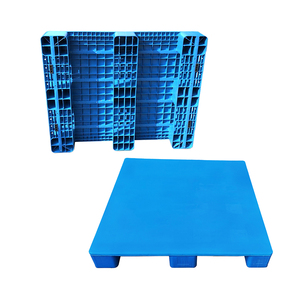
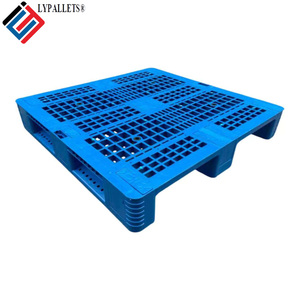
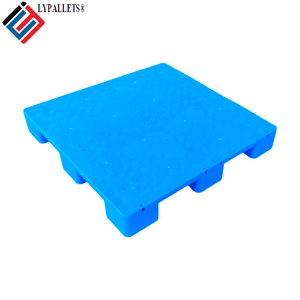
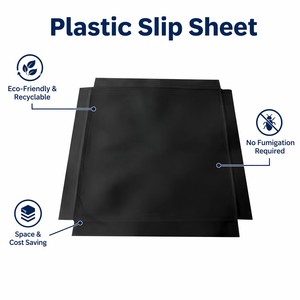
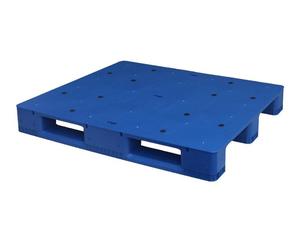
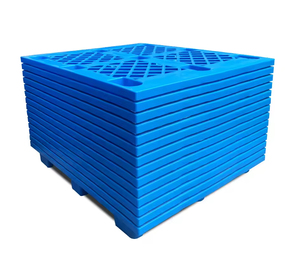
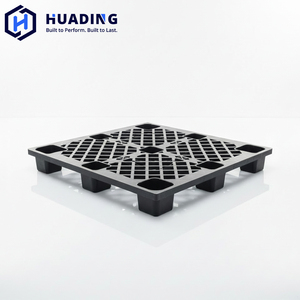
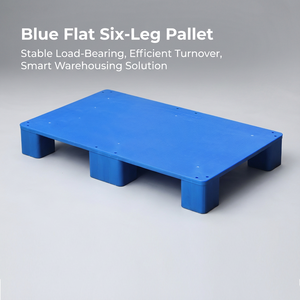
Costa Rica represents Central America's pinnacle of high-value agricultural export logistics and precision medical technology manufacturing. Our pallet architectures are customized to conquer the rigorous microclimates, phytosanitary pressures, and automated warehouse standards across San José, Alajuela, Cartago, and coastal ports.
Exporters in the Atlantic lowlands (Limón, Guápiles) and Northern Zone (San Carlos) face chronic fungus, wood-decay rot, and mold threats from traditional wooden timber pallets. Our perforated grid HDPE pallets are engineered for forced-air pre-cooling tunnels, maintaining thermal stability down to -25°C. With zero water absorption, gross tare weight stays unchanged during maritime reefer transit to North American and European ports, eliminating moisture penalty costs and phytosanitary rejections at destination customs.
Costa Rica's world-leading medical device manufacturing cluster at Coyol Free Zone (Alajuela) and Cartago demands ISO Class 7 and Class 8 cleanroom compliance. Our solid flat-top hygienic pallets are injection molded without crevices, hollow cavities, or exterior weld beads where bio-burden, particulate matter, or microbes can shelter. Easily sanitized using automated high-pressure spray washers with enzymatic disinfectants or vaporized hydrogen peroxide (VHP).
Navigating maritime logistics through APM Terminals Moín (Caribbean) and Puerto Caldera (Pacific) requires structural resistance against intense ultraviolet radiation and saline air exposure. Reinforced with UV-stabilizer package Ciba Tinuvin 770, our heavy-duty pallets prevent photo-oxidative degradation, embrittlement, and dynamic cracking in coastal container yard marshalling. Steel-reinforced 3-runner pallets guarantee smooth transition across roller conveyors and multi-tier selective pallet racking.
Under Costa Rica's National Decarbonization Plan 2018–2050 (Plan Nacional de Descarbonización) and circular economy directives championed by the Ministry of Environment and Energy (MINAE), multi-national logistics operators, retailers (such as Walmart Central America and Auto Mercado), and agricultural consortia are actively replacing single-use wooden pallets with closed-loop returnable plastic platforms.
Timber pallets carry substantial environmental and economic liability: strict compliance with IPPC ISPM-15 regulations demands chemical fumigation with methyl bromide or heat treatment (HT), creating recurring operational delays, pest liability, and uneven tare weight due to high atmospheric humidity (often exceeding 85% in Costa Rican plantation zones). In contrast, our engineered polymeric pallets offer an average operational service life of 8 to 10 years with more than 100 round trips, representing a dramatic 72% lifecycle carbon reduction over untreated pine or native hardwood.
Furthermore, the surge in robotic ASRS (Automated Storage and Retrieval Systems) and radio shuttle racking across Greater Metropolitan Area (GAM) distribution centers requires dimensional tolerances within ±1.5 mm and zero deflection creep—specifications impossible to achieve with organic timber, but guaranteed by our precision molds.

Comprehensive comparative analysis for supply chain engineers and procurement directors.
| Evaluation Parameter | Virgin High-Density PE Pallet | PCR/PIR Recycled Industrial Pallet | Standard Treated Pine / Hardwood |
|---|---|---|---|
| ISPM-15 Phytosanitary Compliance | 100% Exempt (No fumigation or heat seal required) | 100% Exempt (Zero biological pest harborage) | Mandatory heat treatment mark; risk of port interception |
| Moisture Absorption & Washdown | 0.00% Impermeable (Hot water & chemical sanitizable) | < 0.05% Negligible moisture retention | 18% – 35% Water absorption; prone to mildew and rot |
| Operational Lifecycle Cycles | 100+ Trips in closed-loop / 10-year durability | 40 – 60 Trips industrial warehouse handling | 2 – 6 Trips before nail looseness or slat splintering |
| ASRS & Radio Shuttle Compatibility | Optimum (Deflection < 0.5% under rated load) | Good (Calibrated for uniform warehouse rack spans) | Poor (Wood grain warps under humidity fluctuations) |
| Cold Storage Performance (-25°C) | Excellent with high-impact copolymer additive | Moderate (Configured with anti-cold elastomer) | Wood brittleness increases; nails contract and loosen |
| End-of-Life Environmental Impact | 100% Recyclable into secondary grade polymers | 100% Closed-loop circular economy repolymerization | Landfill or wood combustion contributing to CO₂ emissions |
We combine advanced German injection technologies, robotic demolding, and direct maritime logistics routes to deliver unrivaled cost-to-performance value directly to Puerto Caldera and Puerto Moín.
We source prime virgin HDPE from Sinopec and PetroChina, modified with elastomeric ethylene copolymers to resist notch impact at deep-freeze temperatures. Custom PCR/PIR blends available for budget-conscious closed loops.
Our heavy-duty racking pallets feature patented internal chambers housing up to 8 seamlessly encapsulated hot-dip galvanized steel pipes. This eliminates steel corrosion and prevents load sagging in 1.2-ton high-bay pallet racking.
Every batch undergoes stringent static compression testing (up to 10 tons), diagonal corner drop impact trials from 1.5 meters, and dynamic racking beam deflection verification before export dispatch.
Our nestable design series (such as our 9-leg export pallets) allows up to 1,200 units to be nested into a single 40-foot High Cube shipping container, reducing per-unit ocean freight charges from China to Central America by over 50%.
We offer turnkey mold fabrication for proprietary footprint specifications. Full branding options include hot-stamped corporate logos, sequential barcode molding, anti-counterfeit labels, and dedicated RFID tracking tag cavities.
Our dedicated bilingual logistics managers manage all export shipping documentation, Certificate of Origin (CO), Form E/General CO, bill of lading documentation, and CIF delivery coordinating with shipping lines calling Puerto Caldera and Moín.
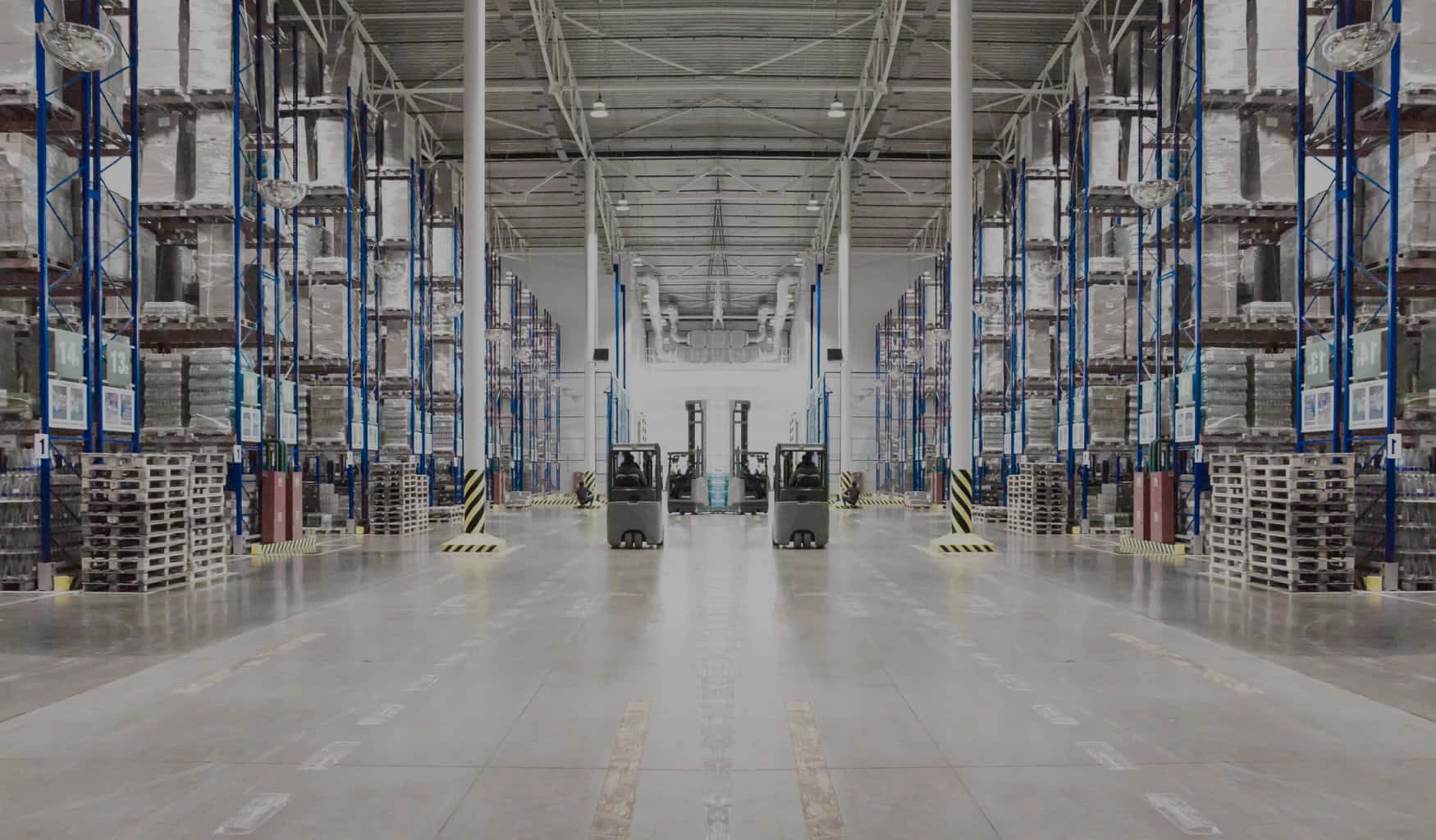
In high-throughput facilities across Costa Rica's commercial distribution zones—such as Coyol, Heredia, and Cartago—racking deflection poses serious safety risks. Wooden pallets degrade unpredictably under point loads, causing sagging and rack beam jams in automated shuttle aisles.
Our heavy-duty three-runner and full-perimeter cross-base plastic pallets are structural monoliths. Engineered with optimized finite-element rib geometry and anti-slip dual elastomer pads vulcanized onto both top deck and bottom runners, they guarantee zero slippage on polished steel rack beams and forklift tines.
By preventing splinter discharge, protruding nails, and sharp hardware, our pallet designs dramatically reduce worker injury rates and eliminate catastrophic product punctures in corrugated cartons and aseptic dairy pouches.
Essential guidance for customs clearance, tariffs, material selection, and cold-chain compliance.
Shipments depart from China's premier container ports (Ningbo-Zhoushan, Shanghai, Qingdao, or Shenzhen). For Pacific deliveries serving the Greater Metropolitan Area (GAM), cargo arrives at Puerto Caldera in approximately 26–32 days. For Caribbean-facing operations or direct access to Atlantic freight lines, shipments dock at APM Terminals Moín (Limón) in approximately 28–35 days via direct or transshipment routes through the Panama Canal.
Plastic pallets are typically classified under HS Code 3923.90.00.00 (Paletas y plataformas de carga plásticas). Import duties (DAI - Derecho Arancelario a la Importación) generally range between 5% and 10%, plus the standard 13% Value Added Tax (IVA). However, companies operating under Costa Rica's Régimen de Zona Franca (Free Trade Zone Law No. 7210) in parks like Coyol Free Zone, BES, or Cartago enjoy 100% exemption on customs duties and import taxes for capital assets and production logistics materials.
For closed-loop distribution or export where pallets come into direct or close washdown contact with food commodities (such as pineapples, melons, and fresh seafood), we strongly specify Virgin HDPE with FDA 21 CFR 177.1520 compliance. Virgin material prevents brittle fracture at low temperature (-20°C in reefer containers). For dry manufacturing, industrial goods, and one-way outbound export where pallets are not returned, our modified Recycled Polyolefin (PIR/PCR) grade offers significant cost savings while maintaining structural integrity.
Unlike wood, which absorbs water, fosters Aspergillus fungi, and gains up to 5 kg of dead weight in Costa Rica's humid Atlantic climate (Limón / Sarapiquí), our non-porous HDPE polymer has a water absorption rate of 0.00%. It is completely inert to organic acids, chemical sprays, fertilizers, and chlorine sanitizers, preventing cross-contamination and eliminating downtime associated with phytosanitary quarantine delays.
For standard catalog molds, our baseline MOQ is typically a 1 × 20'GP container (approx. 200–450 units depending on model and nestability). However, the most economical freight tier is a 1 × 40'HQ container, which accommodates up to 500–550 units of full-perimeter runner pallets, or up to 1,100–1,250 units of 9-leg nestable export pallets. We also accommodate consolidated mixed-container orders for buyers shortlisting multiple pallet sizes.
Yes. We provide precision silkscreen printing, thermal hot-stamping, and in-mold embossed corporate logos to prevent asset theft in local pooling operations. Standard stock colors are Industrial Blue, Pure Green, and Logistics Grey, with custom Pantone corporate color matching available for batch volumes above 500 units.
Connect directly with our engineering team to review technical drawings, request comprehensive load-deflection test reports, or receive a tailored CIF Puerto Caldera / Puerto Moín freight quotation.