Executive White Paper: Standardizing Industrial Tire Storage Architecture
In modern automotive supply chains, third-party logistics (3PL) hubs, and tire manufacturing facilities, standard warehouse pallet racking frequently falls short of meeting the unique physical and spatial demands of rubber tire inventory. Tires are non-rigid, high-friction, heavy circular items that present severe load-distribution challenges when bulk-stacked on traditional flat shelving.
As a leading registered manufacturer (My Interack Sdn. Bhd. / SSM 202201004215 / 1449912-V) of enterprise warehouse racking systems, we specialize in turn-key OEM/ODM tire rack engineering. From heavy-duty PCR (Passenger Car Radial) stackable pallets to massive TBR (Truck, Bus, and Radial) and OTR (Off-the-Road) tire racking platforms, optimized structural integrity is essential to operational safety, damage prevention, and floor-space yield.
The Mechanical Risk of Non-Specialized Tire Racking
Storing passenger or commercial tires improperly causes permanent tread dynamic deformation, sidewall tread-cracking, and localized bead compression. Traditional flat palletization results in lower tier crushed sidewalls, compromising tire structural safety before retail distribution. Specialized tubular tire cradles support the curvature of the tire across dual contact points, eliminating concentrated pressure spots.
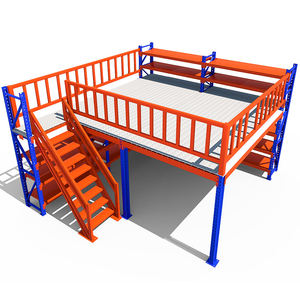
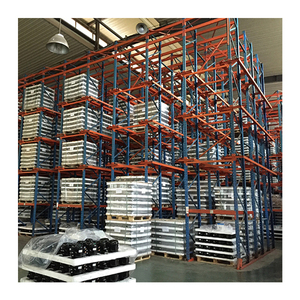
Furthermore, bulk floor stacking creates severe safety hazards, violating OSHA and EN 15512 logistics parameters. Our heavy-duty steel rack-supported infrastructures allow high-density vertical stacking up to 5-levels high without placing physical weight on the underlying rubber inventory.