Engineering Authority • B2B Manufacturing Directory

Top China Gravity Roller Conveyor Factory & Supplier

Precision-engineered zero-energy unpowered conveyance systems, high-density flow tracks, and heavy-duty intralogistics material handling hardware designed to ISO 9001:2015 and CEMA industrial standards.

0.025
Friction Coefficient (μ)
3,500kg
Max Pallet Line Rating
100%
Zero-Power Gravity Flow
≤L/500
Structural Deflection Limit
Industrial Catalog Selection

Integrated Gravity Flow, Stacking & Material Handling Equipment

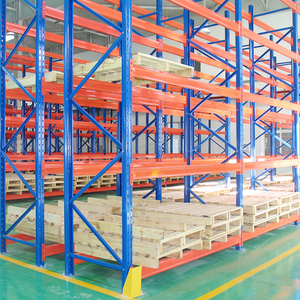
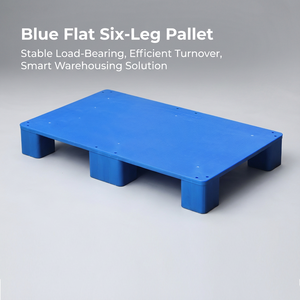
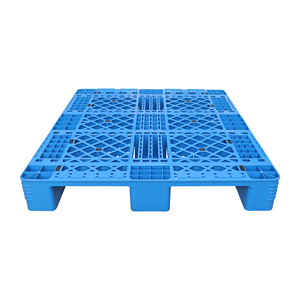
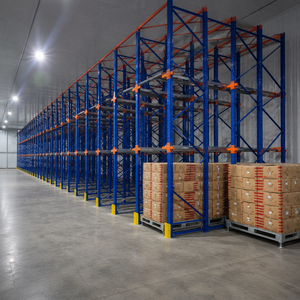
A synergistic suite of precision gravity roller lines, heavy-duty storage racks, structural mezzanines, and modular logistical pallets designed for holistic warehouse automation and zero-energy product movement.

Engineering White Paper

The Kinematics & Mechanics of Industrial Gravity Roller Lines

A true unpowered gravity roller conveyor functions as an energy-neutral mechanical transfer system where package descent is governed strictly by gravity overcoming static and dynamic friction. When designing an unpowered transfer line, procurement engineers must account for package firmness, bottom surface topology, roller inertia, and ambient working temperatures.

The standard descent condition requires the gravimetric downhill force component to exceed rolling resistance: F_g > F_r. If the slope gradient θ is engineered too flat, packages stall; if engineered too steep, terminal descent speed causes product impact damage at the end-stop.

Descent Gradient Threshold Formula:
tan(θ) ≥ μ_r × (D / d) + (2 × f_b / d)
Where μ_r is roller-to-package rolling friction, D is roller outside diameter, d is inner bearing journal diameter, and f_b is the internal bearing drag coefficient.

For standard corrugated cartons on zinc-plated carbon steel rollers (Φ50mm), the empirical gradient typically ranges between 1.5° and 3.5° (25mm to 60mm drop per linear meter). For rigid wooden or plastic pallets weighing over 800 kg, slope angles are narrowed to 1.2° to 2.0°, combined with centrifugal speed controllers to throttle speeds under 0.3 m/s.
Engineering Golden Rules

  • The 3-Roller Rule: A minimum of three rollers must support the shortest conveying unit at any point in time to prevent bridging and conveyor pitching. Pitch ≤ Min_Item_Length / 3.
  • Load Capacity Derating: Total static line load capacity must never be divided equally across all rollers. Due to carton deformation, point loads assume 2 rollers carry up to 60% of total payload weight.
  • Deflection Limit: Roller axle and tube deflection under static working load must not exceed L / 500 to prevent bearing race misalignments and premature bearing failure.

Standard Industrial Gravity Roller Selection Matrix

Tube Diameter (Φ) Wall Gauge Axle Profile Bearing Core Spec Max Load / Roller Typical Industrial Target
Φ38 mm 1.2 mm / 1.5 mm 10mm Hex / Φ12 Round Precision 6000-2RS / Stamped Carbon 45 kg – 75 kg Light carton fulfillment, e-commerce sortation tables
Φ50 mm (Industry Standard) 1.5 mm / 2.0 mm 12mm Hex / Spring Loaded 6002-RS Deep Groove Precision 120 kg – 180 kg Medium totes, logistics transfer, pick-and-pack stations
Φ60 mm 2.0 mm / 3.0 mm 14mm Hex / Female M10 Thread 6204-2RS Low-Friction Sealed 220 kg – 320 kg Heavy plastic crates, appliance packaging, airport cargo
Φ76 mm 3.0 mm / 4.0 mm Φ20 Round / M12 Threaded Heavy-Duty Precision Machined Housing 450 kg – 650 kg Pallet transfer runs, automotive powertrain logistics
Φ89 mm (Heavy Pallet) 3.5 mm / 4.5 mm Φ25 Round / Solid Axle 6205 Cast Iron Housing Double Sealed 800 kg – 1,200 kg Foundry molds, full Euro-pallet gravity decline racking
Innovation Roadmap

Technological Evolution: From Crude Idlers to Smart Gravity Engineering

How modern metallurgic precision, bearing tribology, and acoustic damping transformed ordinary gravity pipes into high-efficiency industrial conveyance mechanisms.

Acoustic Damping & Polymer Bushings

Traditional metal-on-metal stamped bearings generated noise levels exceeding 78 dBA across fulfillment centers. Modern gravity rollers incorporate glass-fiber reinforced polypropylene end-caps and precision ground 6002-RS bearings, reducing ambient warehouse decibels below 58 dBA even under full carton throughput.

Dynamic Speed Governance Retarders

Uncontrolled acceleration along long gravity lines historically led to package collisions. Modern installations integrate internal planetary gear centrifugal brakes and non-contact permanent magnet hysteresis rollers, holding package travel at an exact 0.25 to 0.4 m/s without requiring sensors or PLC controls.

Anti-Corrosive Electro-Chemical Passivation

Standard raw steel rollers corrode rapidly in cold storage and high-humidity coastal hubs. Contemporary Chinese manufacturing utilizes continuous hot-dip zinc plating (galvanizing ≥12μm), polyurethane sleeving, and SUS304 seamless mirror-polished tubes for FDA food grade and cleanroom compliance.

Why Partner With Us

Factory Direct Precision & Global Project Execution

Backed by decades of industrial manufacturing, certified production facilities, and an international delivery portfolio spanning major multinational distribution centers across Asia, Europe, and the Americas.

⚙

In-House Production Core

We operate dedicated CNC automated tube cutting lines, robotic axle punching, and dynamic balancing test rigs. Every roller is tested for rotational concentricity (≤0.3mm runout) prior to packaging.

☑

Certified ISO 9001 & 14001

Strict quality assurance protocols monitor every raw steel coil batch. Material test certificates (MTC) verifying yield strength, elongation, and chemical composition are furnished with every shipping manifest.

🌎

Proven Overseas Delivery

From our landmark installations for Sony EMCS to massive cross-border distribution centers across Malaysia, Singapore, and Europe, our engineering teams provide complete turnkey layout drawings and site support.

📝

Custom Engineering & BIM/CAD

Send us your floor plan and payload metrics. Our structural engineers provide complete 2D layout planning and 3D CAD/SolidWorks models, guaranteeing beam level, pitch, and deflection calculations before steel is cut.

Application Versatility

Engineered For Mission-Critical Sectors

From heavy industrial manufacturing lines to pristine pharmaceutical dispatch docks, our gravity systems optimize movement across diverse operating conditions.

Industrial Manufacturing

Industrial & Manufacturing

Assembly line workstations, engine block routing, and component feed lines linking stamping presses to painting bays.

Warehouse Logistics

Warehouse & 3PL Logistics

FIFO dynamic pallet flow lanes, cross-dock sortation runs, and high-density carton flow shelving systems.

Retail Distribution

Retail & E-Commerce

Rapid pack-out sortation tables, pick-to-light gravity chutes, and ergonomic order fulfillment stations.

Supermarket Distribution

Supermarkets & FMCG

Beverage case transfer, dairy box gravity runs, and high-turnover regional distribution cross-docks.

Document & Archives

Archive & Office Document Flow

Tidy, low-noise gravity skate-wheel runs for legal boxes, records management, and high-density document repositories.

Cold Chain & Refrigerated Storage

Cold Chain & Blast Freezers

Specialized low-temperature synthetic grease bearings rated for -30°C operations without freezing or torque spikes.

Procurement Knowledge Base

Frequently Asked Questions on Gravity Roller Sourcing

Technical guidance, calculation rules, container packaging, and international trade compliance directly from our engineering desk.

Q1: How do I determine the correct roller pitch for mixed carton sizes?

To prevent packages from rocking or stalling, calculate the center-to-center roller pitch based on your smallest package length: Pitch = Smallest_Length / 3. For example, if your shortest carton is 300mm, the roller pitch must not exceed 100mm (common standard pitches: 75mm, 100mm, 150mm).

Q2: What slope incline is required for reliable gravity pallet flow?

Pallet flow systems typically require an incline gradient between 1.5% and 3.5% (approx. 1.2° to 2.0°). Rigid wooden GMA and Euro pallets roll smoothly at around 2.5%, whereas softer HDPE or recycled plastic pallets may require up to 3.0% to overcome bottom rib deformation over the rollers.

Q3: When should I specify precision bearings vs. stamped carbon bearings?

Stamped commercial bearings are cost-effective for hand-loaded assembly benches under 40 kg per roller with intermittent usage. For continuous automated sorting, cold environments, washdown sanitation, or loads exceeding 100 kg per roller, 6000-series 2RS precision ground ball bearings with dual lip contact seals are mandatory.

Q4: What are the standard frame channel materials and finish options?

Frames are fabricated from CNC roll-formed carbon steel (C-channel 80x40x2.0mm or 100x50x3.0mm) coated with thermoset electrostatic powder coat (RAL colors customizable), hot-dip galvanized steel, or lightweight 6063-T5 architectural anodized aluminum extrusion.

Q5: How do you prevent terminal impact damage at the conveyor end?

On long gravity decline sections (>6 meters), we incorporate mechanical or centrifugal speed controller rollers at regular intervals (every 2-3 pallet lengths) to throttle descent speed under 0.3 m/s, combined with end-stop hydraulic buffer shock absorbers.

Q6: How are conveyors packaged to maximize ocean freight container utilization?

Standard 3-meter conveyor bed sections are shipped knocked-down (SKD) with side frames nested and rollers bundle-strapped or packed in seaworthy ISPM-15 heat-treated plywood crates. This allows up to 600 linear meters of conveyor bed to pack inside a single 40ft High Cube container.

Q7: Can your factory supply custom axle fittings for existing conveyor frames?

Yes. We manufacture replacement rollers tailored to your existing frame punch patterns: spring-loaded hex axles (11mm, 12mm, 14mm), female internal threaded shafts (M8, M10, M12), flat milled slotted ends, or loose solid round pins.

Q8: What quality certificates and warranties are provided with export shipments?

Every shipment includes an ISO 9001:2015 inspection certificate, mill test reports (MTR) for steel components, a CE Declaration of Conformity where requested, and our standard 12-to-36-month industrial structural warranty against material and manufacturing defects.

Accelerate Your Intralogistics Workflow Today

Connect with our senior engineering team for tailored layout consultations, mechanical load modeling, and factory-direct wholesale quotations with transparent container freight logistics.

+60 11-3302 1235[email protected]