Precision-engineered racking components designed to handle extreme point loads, dynamic reel rotation, and rough-and-ready continuous line dispensing.
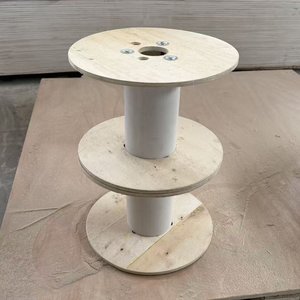
A rigorous examination of mechanical load factors, dynamic rotational pay-off mechanics, and spatial utilization across modern Mexican industrial hubs.
Standard structural pallet racks assume stationary, uniformly distributed loads (UDL). Conversely, cable reel rack manufacturer frameworks must withstand localized point-concentration and asymmetric pulling forces caused by motorized or manual decanting reels.
Central and southern Mexican industrial parks, especially along the Bajío and Jalisco corridors, require strict compliance with the Comisión Federal de Electricidad (CFE) manual for seismic civil designs, dictating heavier baseplate anchors and thick cold-formed uprights.
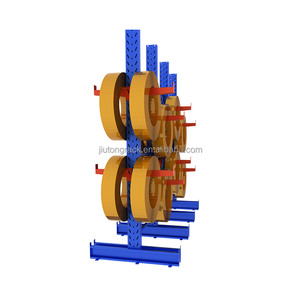
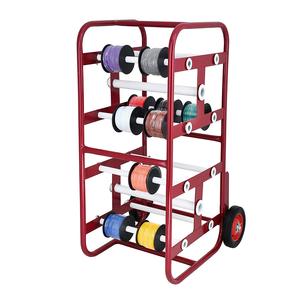
In Tier-1 automotive wiring harness production (Arneseras), continuous batch-tracking requires multi-tiered accessibility. Our axle saddles offer individual bay selectivity without disturbing vertical neighbor spools.
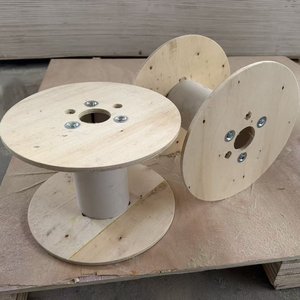
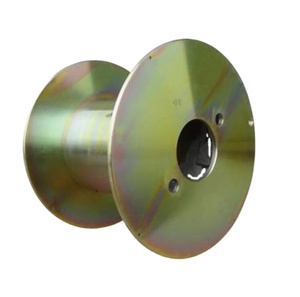
Industrial wire harnesses, continuous mining umbilical cables, and power grid conductor reels possess extreme bulk densities with cylindrical footprints. When warehouse operators in Monterrey, Tijuana, or Querétaro attempt to rest massive spools directly on traditional selective pallet racks with wire decking, beam deflection thresholds are regularly breached within weeks.
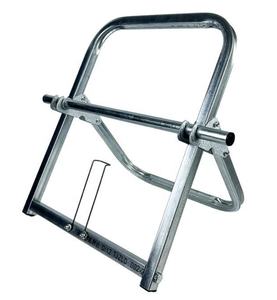
Engineered cable reel racking adopts precision solid-steel solid axle spindles mounted inside anti-friction, self-retaining saddle brackets. This redistributes point weight immediately down the high-tensile column upright (50,000 PSI minimum yield steel), preventing longitudinal torsion during high-speed pull-off operations.
| Engineering Attribute | Standard Selective Pallet Rack | Heavy-Duty Cable Reel Rack | Operational Impact |
|---|---|---|---|
| Primary Load Geometry | Uniformly Distributed (UDL) | Concentrated Point Load on Spindle | Zero structural beam deflection under dynamic pull |
| Dispensing Capability | Static Only (Requires forklift down-take) | Direct Pay-Off on Rack Axis | Reduces coil decanting cycle time by 68% |
| Torsional Resistance | Nominal roll-formed channel capacity | Reinforced boxed channel with welded gussets | Prevents upright twisting during aggressive pulling |
| Safety Factor | 1.65 to 1.95 (RMI Standard) | 2.2 to 2.5 (Dynamic Load Design) | Maximum protection in high-frequency manufacturing plants |
Drum Positions Installed Worldwide
Max Dynamic Load Capacity Per Spindle Level
Certified Production & Stress Testing Protocol
Direct Axle Selectivity for Automotive Harness Plants
How our heavy-duty cable storage designs integrate directly into the production floors of the world’s most demanding manufacturing clusters.
Hubs: Ciudad Juárez, Chihuahua, Saltillo, and Puebla.
Automotive harness assembly represents Mexico's critical manufacturing backbone. Plants handling thousands of primary wire spools require quick-change spindle brackets that allow operators to smoothly wind lead wires into complex routing boards without spool binding or micro-abrasions to cable jackets.
Hubs: Querétaro Aerospace Cluster, Sonora, and Mexicali.
Aviation manufacturing demands high-spec Teflon-coated and fiber-optic cables stored under strict environmental conditions. Our static dissipative powder coatings and high-precision axle bearings protect delicate instrumentation wiring against structural vibration and particulate shedding.
Hubs: Coahuila, Tamaulipas, and Oaxaca.
With utility-scale photovoltaic parks and high-voltage wind farms rapidly scaling, EPC contractors depend on ultra-heavy spool reels up to 4,000 kg carrying thick medium-voltage underground cables. Our hot-dip galvanized outdoor reel racks resist corrosion even in harsh desert or coastal environments.
Selecting a cable reel rack manufacturer requires verifying deep manufacturing engineering credentials rather than relying on standard commercial distributors. Drawing from extensive warehouse infrastructure achievements across major multinational logistics projects—including automated high-density radio shuttle platforms, selective heavy-duty pallet installations, and complex industrial mezzanines—our team brings verifiable technical rigor to every reel rack system.
Certified Q235B and high-yield Q355 structural carbon steel. Tensile testing verification before every roll-forming run.
Complete robotic seam penetration on spindle saddles, column baseplates, and horizontal beam connectors to prevent dynamic fatigue.
Zinc-phosphating acid wash followed by high-adhesion electrostatic thermosetting epoxy powder coating baked at 200°C.
Every axle bracket is subjected to off-center loading cycles up to 125% of rated capacity prior to global shipping.
Direct technical answers addressing the logistical, compliance, and engineering inquiries common among procurement managers.
We require the maximum flange diameter (OD), traverse overall width, core barrel diameter, total weight per loaded drum, number of active dispensing levels required, and the handling method (reach truck, counterbalance forklift, or overhead crane hoist).
Our heavy-duty solid steel axle tubes utilize modular quick-lock polyurethane or nylon centering bushings. This prevents the reel from wandering laterally or chewing into the steel spindle regardless of whether the spool utilizes a 2-inch, 3-inch, or larger arbor opening.
Yes. However, because cable reel systems create heavy concentrated point loadings through the upright baseplates, your warehouse concrete floor must meet a minimum compressive strength of 250 kg/cm² (approx. 3,500 PSI) with minimum 150mm slab thickness for standard seismic zones.
Every cradle bracket features an integrated mechanical drop-lock or gravity latch mechanism. Once the axle drops into the saddle pocket, the latch automatically swings into place, preventing upward or forward lifting forces from kicking the spindle out during rapid cable dispensing.
Our structural designs can be custom-calculated to align with Mexican NOM requirements and international RMI (Rack Manufacturers Institute) / EN 15512 safety standards, accounting for specific regional ground acceleration values across Mexico’s seismic zones (A, B, C, and D).
Standard components are manufactured and dispatched under strict project schedules. Ocean freight routing to ports like Manzanillo, Altamira, or Veracruz is seamlessly coordinated, supported by full customs engineering documentation for prompt site clearance.
Connect directly with our engineering layout team to review your drum dimensions, clear warehouse height, and line pay-off requirements. Receive a comprehensive CAD proposal and finite structural analysis.
Send an Inquiry