Structural Seismic Integrity · AS/NZS 4084:2023 & NZS 1170.5

Mold Storage Rack Manufacturer & Factories Serving New Zealand

Heavy-duty tooling storage, die management engineering, and high-density industrial racking systems designed for New Zealand injection moulders, progressive stamping plants, and advanced precision fabricators.

High-Capacity Industrial Inventory

Engineered Mold & Tooling Storage Portfolio

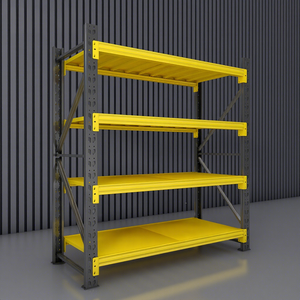
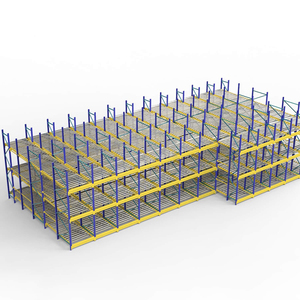
From single-tier drawer units to automated mold racking and multi-level structural platforms, explore our certified storage lines configured for high point loads and rapid tool-change cycles.

5,000 KG

Maximum Drawer Load Capacity per Level with Full 100% Extension

NZS 1170.5

Verified Seismic Design Categories Across North & South Island Zones

Q355B

Certified High-Yield Hot-Rolled Structural Steel Framing

100%

Direct Factory Quality Control with Full Material Traceability Certificates

Technical Engineering Whitepaper

Mold Storage Engineering for New Zealand’s Seismic Microclimates & Heavy Industries

Storing precision injection molds, stamping dies, cold heading tools, and extrusion tooling presents mechanical challenges that standard warehouse pallet racking was never designed to address. Molds are ultra-dense, concentrated mass items often weighing between 800 kg and 6,000 kg within footprint areas smaller than a standard EUR or Chep pallet. When subjected to New Zealand’s stringent structural and seismic building regulations—notably AS/NZS 4084:2023 (Steel Storage Racking) and NZS 1170.5 (Structural Design Actions - Earthquake Actions)—die storage infrastructure demands rigorous static and dynamic structural modeling.

Key Engineering Differentiator: Unlike general pallet racks where loads are distributed over lengthy horizontal beams, mold storage racks experience severe point deflections and dynamic horizontal shock loads when slide-out shelves are extended. Our custom-manufactured tooling racks incorporate reinforced Q355B channel-steel guide tracks, dual-action safety drawer interlocks, and widened baseplate footprints engineered specifically to achieve building consents (including Council PS1/PS4 pathway support) across Auckland, Christchurch, Wellington, and the Waikato region.

1. Mitigating Dynamic Roll-Out Risk Under Seismic Strain

In New Zealand manufacturing facilities—ranging from high-volume packaging injection moulders in Mount Wellington and East Tamaki (Auckland) to precision engineering toolrooms in Hornby (Christchurch)—the primary safety hazard of mold racks is the unintended release of slide-out drawers during an earthquake. Under NZS 1170.5 seismic loading, spectral accelerations can disengage elementary friction latches.

Our heavy-duty roll-out mold racks feature positive-engagement mechanical drawer safety pins and an automated mechanical interlocking mechanism that permits only one drawer per bay to be pulled out at any given moment. This prevents the center of gravity (CoG) from shifting outward past the tipping tipping line, safeguarding your operators and valuable tool steel assets from cataclysmic frame overturn.

2. Substrate Anchor Load Distribution & Slab Structural Integrity

The standard concrete floor slab in New Zealand industrial units typically ranges from 150 mm to 200 mm thickness with concrete compressive strength between 25 MPa and 35 MPa. Concentrating multi-ton progressive stamping dies on four narrow upright posts can easily punch through or induce shear-cone failures in the slab under seismic cyclic uplifts.

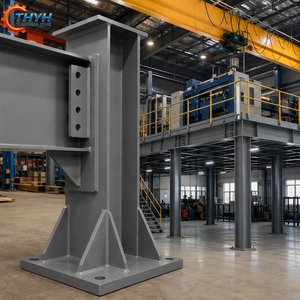
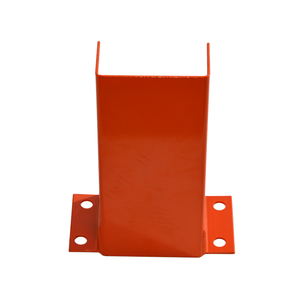
We solve this challenge by supplying laser-profiled, extra-heavy baseplates (12mm to 20mm thickness) engineered to accommodate chemical capsule anchoring (e.g., M16 or M20 cracked-concrete approved anchors). Our finite element analysis (FEA) models evaluate anchor pull-out capacity and edge-distance criteria, ensuring seamless compliance with the New Zealand Building Code (Clause B1 Structure) and WorkSafe NZ Guidelines for the Safe Operation of Heavy Storage Structures.

Targeted Applications

Tailored Tooling Logistics Across New Zealand Sectors

Explore how our specialized mold rack designs resolve workflow bottlenecks, overhead crane dependencies, and footprint constraints in key industrial applications.

Plastic Injection Moulding Facilities

High-speed packaging, dairy export caps, medical plastics, and agricultural irrigation moulders in Auckland and the Waikato require quick tool changes (SMED). Slide-out mold racks with integrated top overhead hoists eliminate forklift congestion in tight press aisles, allowing single-operator tool retrieval within 180 seconds.

Single-Minute Exchange of Die (SMED) Top Monorail Hoist Compatible Zero Hydraulic Oil Pooling

Metal Stamping & Automotive Components

Heavy progressive dies, punch press tooling, and coil blanking dies demand massive weight tolerance. With drawer capacities up to 5,000 kg per level, our heavy-gauge cold-formed uprights and structural channel beams accommodate intense shock loading without residual frame deformation.

5,000 KG Drawer Rating Heavy Stamping Tooling Drop-Bed Anti-Deflection Design

Aluminium Extrusion & Die Casting

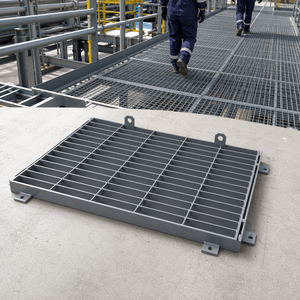
High-temperature dies and extrusion rings require organized, dry, and damage-protected shelving. Utilizing heavy-duty galvanized structural grids or thick steel plates, our racks protect critical polished die faces from corrosive moisture and accidental contact with forklift tines.

Protected Die-Face Bearings Thermal Distortion Resistant Modular Drawer Configurations
Engineering Specifications

Mold Storage System Selection Matrix

Compare mechanical configurations, extension limits, seismic anchoring parameters, and load capacities to specify the ideal infrastructure for your New Zealand plant.

Storage Architecture Load Rating / Level Drawer Extension Handling Interface Seismic Anchorage Spec Typical NZ Facility Use
Standard Slide-Out Mold Rack 800 kg – 1,500 kg 65% Partial Extension Overhead Crane / Forklift M12 Epoxy Anchors / 120mm slab Small-to-medium plastic injection tools
Full-Stroke Heavy Die Rack 2,000 kg – 5,000 kg 100% Full Extension Overhead Gantry / Jib Hoist M16–M20 Hilti HST3 / 180mm slab Automotive & structural stamping dies
Integrated Overhead Crane Rack 1,000 kg – 3,000 kg 70%–100% Extension Built-in Electric Monorail Hoist Reinforced Portal Baseplates / 200mm Facilities lacking dedicated bridge cranes
High-Bay Heavy AS/RS Tool Bank 1,500 kg – 3,500 kg Fixed High-Density Shuttle Automated Stacker Crane / AGV Continuous Guide Rail Foundation 24/7 Smart factories & clean-room buffers
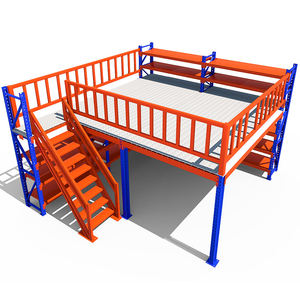
Mezzanine-Supported Tool Deck 350 kg – 1,000 kg/m² Fixed Platform Shelving Pallet Gate / Goods Hoist Column Tie-Backs + Bracing Bays Spare tool inserts, fixtures, mold maintenance

*All units undergo 1.5x static proof loading tests. Structural steel certificates (Mill 3.1) and seismic calculations supplied upon request for Territorial Authority consents.

Industry 4.0 & Market Evolution

Trends Reshaping New Zealand Tooling Logistics

From Auckland's soaring industrial square-meter rental costs to rigorous WorkSafe compliance, modern Kiwi manufacturing operations are radically upgrading their floor management.

Footprint Compression Amid High Industrial Rents

With prime industrial property in Auckland (Highbrook, Penrose, Albany) and Christchurch (Wigram, Hornby) fetching upwards of $220–$290/m² net, floor stacking of multi-ton dies is no longer economically viable. High-density vertical mold racks recover up to 75% of lost floor space, allowing companies to install additional production machinery without costly property expansions.

WorkSafe NZ & Zero-Harm Machine Safety Mandates

WorkSafe New Zealand continues to clamp down on unsafe lifting practices and inadequate rack maintenance. Manual handling of heavy dies using improvised forklift attachments creates severe crush and amputation hazards. Our roll-out racks with positive mechanical interlocks and certified top-hoist integration align directly with the Health and Safety at Work Act 2015 (HSWA).

Corrosion Resilience for Island Microclimates

New Zealand's narrow landmass exposes inland industrial zones to maritime salt air, creating severe electrolytic corrosion risks for raw tool steel and storage framing. We utilize heavy shot-blasting (SA 2.5) followed by multi-stage thermosetting epoxy powder coating or full hot-dip galvanizing per AS/NZS 4680, guaranteeing decades of rust-free performance.

Enterprise Manufacturing Capabilities

Factory-Direct Quality, Global Engineering Precision

Benefit from our state-of-the-art heavy structural production base, comprehensive ISO-certified QC protocols, and direct-to-site New Zealand export expertise.

ISO 9001 & ISO 14001 Quality Regimes

Every batch of cold-formed steel uprights, slide rails, and bearing carriages passes automated laser dimensional checks, ultrasonic weld seam inspections, and mechanical tensile validation. We operate under stringent environmental and quality management systems certified to international benchmarks.

Q345B & Q355B Heavy Structural Steel

We reject substandard light-gauge steels. Our primary structural load members are fabricated from Q345B and high-yield Q355B structural plate steel, delivering superior fracture toughness, high yield strength (Fy ≥ 355 MPa), and reliable ductility under cyclical seismic dynamic loads.

Direct Freight to Auckland, Tauranga & Lyttelton

With extensive shipping experience across the Asia-Pacific region, we deliver streamlined containerization (20GP, 40HQ, Open Top for pre-assembled heavy towers) directly to the Port of Tauranga, Ports of Auckland, and Lyttelton Port, supported by comprehensive MPI-compliant fumigation and packaging documentation.

Trusted by Global Manufacturing & Logistics Giants Across APAC
Sony EMCS
Adidas Logistics
CEVA Logistics
DHL Supply Chain
UMW Heavy Equipment
Daihatsu Automotive
Procurement Due Diligence

Frequently Asked Questions by New Zealand Plant Engineers

Straightforward, technically verified answers addressing engineering standards, territorial consents, site preparation, and freight logistics for NZ buyers.

Q1 How do your mold storage racks satisfy AS/NZS 4084:2023 and NZS 1170.5 seismic standards?

Our mold storage racking systems are engineered using finite element analysis (FEA) calibrated to the spectral acceleration curves dictated by NZS 1170.5 for specific New Zealand seismic zones (Zone 1 through Zone 4, covering low-risk Northland to high-risk Wellington and Canterbury). Under AS/NZS 4084:2023, high-density tooling racks are calculated for both operating loads and seismic actions simultaneously. We incorporate heavy upright column profiles with minimum 3.0mm wall thickness, cold-formed Q355B steel, welded back-to-back bracing trusses, and seismic baseplates engineered to transfer overturning moments into the concrete slab without anchor shearing.

Q2 Can we obtain a Producer Statement (PS1 / PS4) for local City Council building consent?

Yes. For installations in New Zealand that exceed regulatory height or load thresholds requiring a building consent under the New Zealand Building Act 2004, we provide comprehensive design packages including raw material mill test certificates (EN 10204 3.1), 3D structural CAD models, static load calculations, and seismic load analyses. We regularly collaborate with local chartered professional engineers (CPEng) in New Zealand to review our factory calculations and issue the Producer Statement 1 (PS1 - Design) and conduct on-site inspections for PS4 (Construction Review).

Q3 What fail-safe mechanisms prevent slide-out drawers from rolling forward during an earthquake?

Unlike light-duty storage shelving that relies on magnetic catches or simple spring clips, our industrial roll-out mold racks employ dual-stage positive mechanical locks. When a drawer is returned to its parked position, a heavy drop-pin mechanism automatically locks into a high-tensile steel arrestor block. Furthermore, an integrated anti-tip sequential interlock bar prevents operators from opening a second drawer in the same vertical bay until the first drawer is completely closed and locked. This eliminates hazardous center-of-gravity shifts during seismic ground motion.

Q4 What concrete slab specifications are required to support a 2,000 kg – 5,000 kg per-drawer mold rack?

For standard 2,000 kg per-level drawer racks (typically 3 to 4 levels high, totaling 6,000 kg to 8,000 kg per bay), an uncracked industrial concrete slab of at least 150mm thickness with 25 MPa to 30 MPa compressive strength is recommended. For ultra-heavy configurations (up to 5,000 kg per drawer), a 180mm to 200mm slab is advised. Our engineering team reviews your site soil classification, slab thickness, and reinforcement details (e.g., mesh 665, 668, or fiber-reinforced) to optimize baseplate surface area and specify suitable anchor depths (such as Hilti HST3 or Fischer FAZ II seismic expansion anchors).

Q5 How do you manage sea freight, customs clearance, and Biosecurity New Zealand (MPI) rules?

We manage factory export packaging under rigorous international phytosanitary and biosecurity standards. All timber dunnage and skids are certified ISPM-15 heat-treated to pass Ministry for Primary Industries (MPI) inspections at New Zealand ports without delay. High-precision components (guide bearings, gearboxes, hoists) are vacuum-sealed in anti-corrosion VCI barrier film. We ship standard full-container loads (20ft and 40ft High Cube) directly to Auckland, Tauranga, and Lyttelton on CIF, CFR, or DDU (Delivered Duty Unpaid) incoterms.

Q6 Can the racks be equipped with top-mounted jib cranes or electric hoists?

Yes. We offer fully integrated overhead gantry structures and top-mounted monorail I-beams rated for electric chain hoists (ranging from 500 kg to 3,000 kg SWL). This self-contained setup is ideal for New Zealand facilities that lack high-capacity bridge cranes. When using an overhead hoist, the top horizontal members of the rack are fabricated from structural universal beams (UB) reinforced with gusseted portal knee joints to safely absorb dynamic hoist deceleration and swinging lateral loads.

Q7 What are the maintenance and routine inspection requirements under WorkSafe NZ?

Under WorkSafe NZ's safe work instruments and AS/NZS 4084:2023, storage racking installations must undergo regular operational checks by trained staff and at least an annual comprehensive inspection by a competent person. We provide a complete Operation & Maintenance (O&M) manual with each project, specifying bearing lubrication intervals, torque verification for anchor bolts, and clear maximum safe working load (SWL) signage for every individual drawer and total bay capacity.

Q8 Can your factory manufacture custom drawer dimensions to match existing Japanese, European, or US tool sizes?

Absolutely. Every mold storage rack we manufacture can be customized to your precise tooling dimensions (width, depth, shut height, and clamp-plate overhangs). Whether your plant runs standard DME, Hasco, or custom progressive stamping die shoes, our engineers adjust the drawer clear opening, roller-bearing spacing, and vertical pitch (adjustable on 50mm or 75mm hole increments) to ensure zero wasted volumetric space.

Request a Customized Mold Storage Engineering Proposal

Connect directly with our senior structural engineers. Submit your tool dimensions, maximum die weights, clear facility heights, and factory floor plan for an optimized 2D/3D layout consultation and formal quote tailored to New Zealand standards.

+60 11-3302 1235[email protected]